Guides
Bluestone, Sandstone or Exposed Aggregate: Which Paving Material Is Right?
How the three most-used Melbourne residential paving materials compare on cost, durability, slip rating, summer heat retention and architectural pairing.
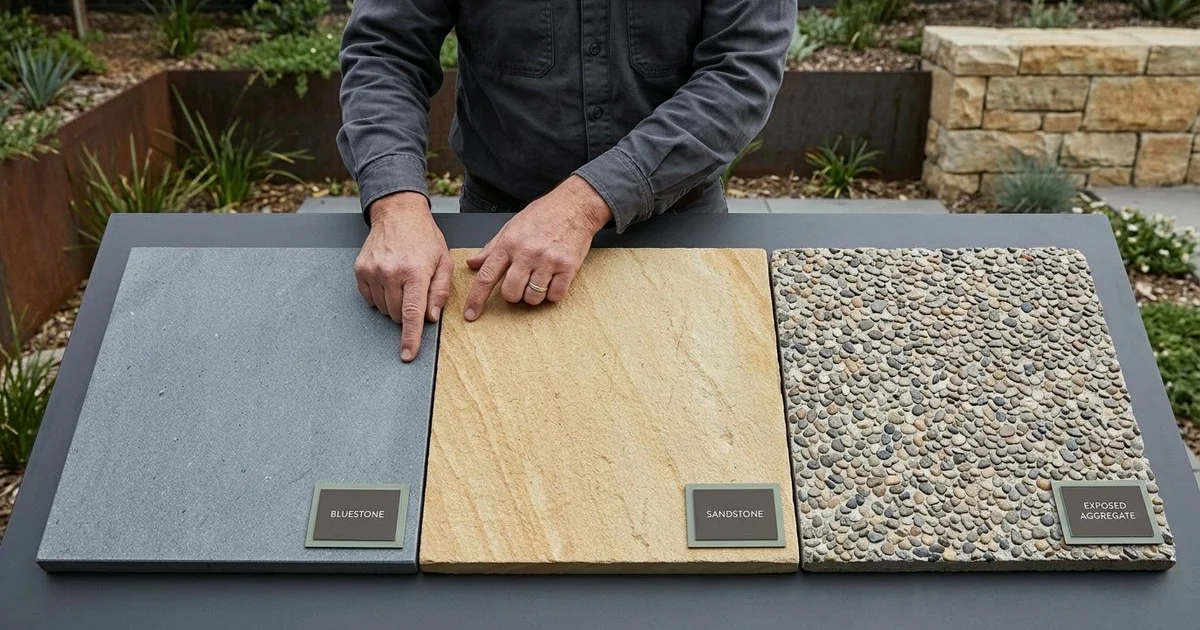
The Three Most-Used Materials
We often see homeowners wrestling with the exact same landscaping dilemma when dealing with Melbourne’s challenging terrain. Choosing the right surface is critical when you factor in the reactive clay soils common to north-eastern and inner-eastern suburbs like Ivanhoe and Kew. This underlying ground movement makes the bluestone vs sandstone vs exposed aggregate comparison more than just an aesthetic choice.
Our team at David Claude Landscape Design consistently finds that selecting the wrong material leads to cracking and costly repairs down the track. The right decision comes down to matching the material’s structural limits with your property’s specific gradient and soil profile. Heavy winter rain requires a stable, well-draining base to prevent the ground from shifting.
We design most premium residential projects using a strategic combination of these three dominant materials:
- Natural stone works beautifully for visible entryways and pedestrian zones.
- Durable concrete mixes easily handle the heavy vehicle loads.
Quick Comparison
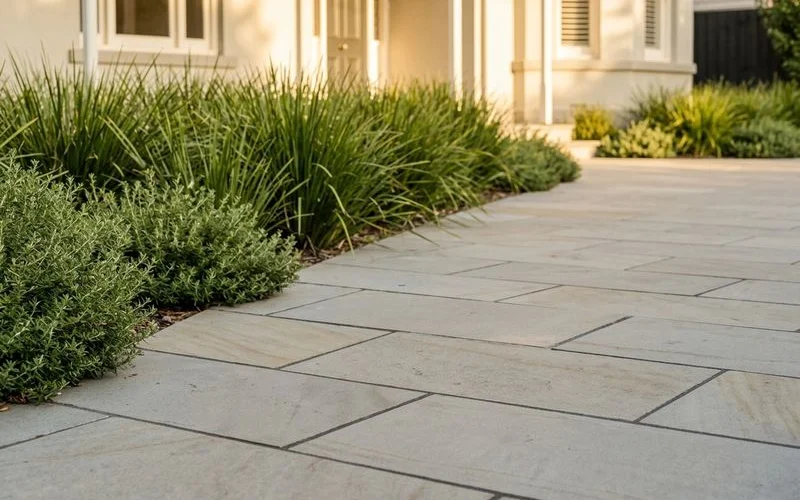
Our experts always recommend looking at the hard data before falling in love with a specific aesthetic. Pricing and safety ratings provide a clear baseline for comparing the best paving material melbourne has to offer. The numbers below reflect current 2026 market averages for professional installation across the inner-eastern suburbs.
We have noticed that decorative concrete options have slightly increased in cost. They still offer exceptional long-term value for expansive spaces. Slip ratings demand careful attention to meet local safety standards on sloped blocks.
| Material | Cost (installed) | Slip rating | Best for | Longevity |
|---|---|---|---|---|
| Bluestone, honed | $250-$400/m² | R11 | Premium driveways, terraces, heritage | Decades |
| Bluestone, flame-finish | $280-$420/m² | R12 / P5 | Steep driveways, pool surrounds | Decades |
| Sandstone, sawn | $200-$320/m² | R11 | Period homes, soft-tone projects | 25+ years |
| Exposed aggregate | $100-$165/m² | R11-R12 | Driveways, high-traffic zones | 25+ years |
Bluestone
Our top recommendation for heritage properties and premium contemporary builds is always high-quality Australian basalt. Victorian bluestone is practically woven into the city’s DNA. Famous varieties like Bamstone are regularly specified for major civic upgrades like the Melbourne Arts Precinct Transformation.
We frequently specify a sawn or flame-finish product to achieve a P5 slip rating. This rating easily meets the Building Code of Australia standards for steep residential driveways. Proper installation guarantees a surface that easily withstands decades of daily traffic.
Our crews highlight three main factors when installing this premium stone:
- Flame-finished options provide maximum grip on severe gradients.
- The dense volcanic rock offers unmatched durability under heavy vehicles.
- We always plan for thermal mass by incorporating shaded design elements.
- Sourcing consistent batch tones requires careful coordination.
- The classic grey colors effortlessly bridge period homes and modern aesthetics.
Sandstone
Our team loves using high-quality sedimentary stone to soften the visual impact of a large landscape. Quarries in New South Wales produce incredible warm honey and cream tones. These pale colors perfectly complement Mediterranean and classic Victorian architecture.
We always emphasize the importance of rigorous maintenance when using this porous material near water. Sandstone installed around a saltwater pool is highly vulnerable to destructive salt attack. Absorbed minerals crystallize and erode the soft surface over time.
Our contractors apply a premium consolidating sealer immediately after installation to protect your investment. This protective barrier must be reapplied every five to seven years. The lighter color profile inherently runs cooler underfoot during a harsh summer compared to dark basalt.
We observe several distinct behaviors with this material over time:
- Light colors reflect heat to keep barefoot areas comfortable.
- A sawn finish provides excellent natural grip around wet zones.
- We warn clients that unsealed stone near pools rapidly degrades from mineral buildup.
- High porosity requires strict sealing schedules to prevent staining.
- The softer surface will show physical wear over several decades.
Exposed Aggregate Concrete
We consider cast-in-place concrete with a mechanical brush finish to be the absolute best dollar-for-dollar value on the market. Current 2026 pricing in Melbourne typically lands between $100 and $165 per square meter. This competitive rate makes it highly attractive for expansive driveways and large utility zones.
Our engineers heavily rely on this resilient material when working in north-eastern suburbs known for problematic ground conditions. The reactive clay soils in these areas expand and contract dramatically with seasonal moisture changes. Concrete handles this shifting terrain beautifully when poured with a deep sub-base.
We install strategic control joints to allow the slab to flex without cracking. The surface aggregate provides an industrial aesthetic while delivering reliable R11 to R12 slip resistance. Customization is easy because homeowners can select specific cement colors to match their facade.
Our maintenance crews note a few key considerations for this surface:
- Patching a damaged section is incredibly obvious and rarely matches the original pour.
- The textured finish lacks the natural warmth and prestige of quarried stone.
- We carefully measure expansion gaps to prevent heat-induced fractures.
- High-traffic zones benefit immensely from the rugged durability.
- A periodic chemical etch keeps the pebbles looking fresh and vibrant.
Choosing for Your Block
We recommend making your final decision based entirely on your budget, property gradient, and architectural style. Any detailed paving comparison residential clients review usually reveals that blending different surfaces yields the most functional result. Here is how to match the material to your specific landscaping requirements.
Heritage Home or Premium Contemporary?
Our landscape architects suggest dedicating your budget to natural stone for the visible front yard. Choose bluestone for cooler tones alongside contemporary builds. Sandstone warms up period homes beautifully.
Driveway with Budget Pressure?
We advise switching to exposed aggregate to significantly reduce total project costs:
- This material runs at full performance under heavy vehicle loads.
- The visual transition from natural stone is easily softened by clever surrounding planting.
Steep Driveway or Pool Surround?
We never compromise on safety margins when dealing with steep slopes or wet areas. Flame-finish bluestone offers exceptional R12 grip for these high-risk zones. Honed bluestone looks sleek on level terraces but lacks the friction required for gradients.
Our most successful projects utilize a strategic combination of all three materials to balance visual richness with a sensible budget. For the permeable vs sealed driveway decision, see the dedicated guide. For the broader paving service, see the hub.
We invite you to contact our team today to start planning your next landscaping upgrade. Expert advice ensures your new surface will last for decades. A well-designed driveway completely transforms your property’s curb appeal.