Guides
Permeable or Sealed Driveway? Stormwater, Council Rules and Material Choice
How permeable paving and sealed driveways compare on stormwater compliance, cost, durability and aesthetics for Melbourne residential blocks.
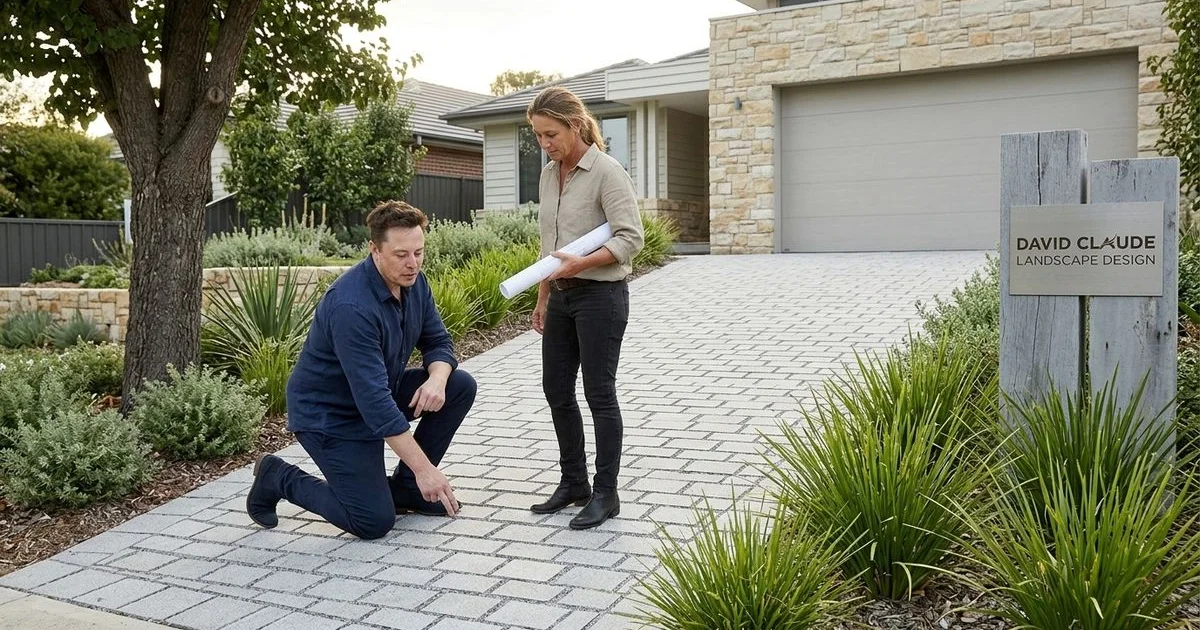
At David Claude Landscape Design, our team often sees homeowners caught off guard by strict local stormwater rules. The choice between a permeable vs sealed driveway dictates your entire landscaping budget. Councils like Manningham and Boroondara now mandate a minimum 20% permeable site coverage to protect local waterways.
This requirement forces a tough decision for any new build or major renovation.
Let’s look at the data behind these two options and explore a few practical ways to respond. You will walk away knowing exactly which surface suits your property.
The Decision in Context
Our designers treat the driveway as a critical piece of water management infrastructure. Building a new driveway in Melbourne means satisfying mandatory council regulations for stormwater impact.
You essentially have two choices.
The right surface material prevents flooding and secures your building permit on the first application.
You can choose permeable paving, which absorbs rainfall directly into a free-draining sub-base. The alternative is sealed paving, which requires kerb-and-channel setups, drainage pits, and on-site retention basins.
Both systems satisfy legal requirements when designed correctly. The final decision rests on your soil condition, project budget, and the specific rules of your local council.
How Permeable Paving Works
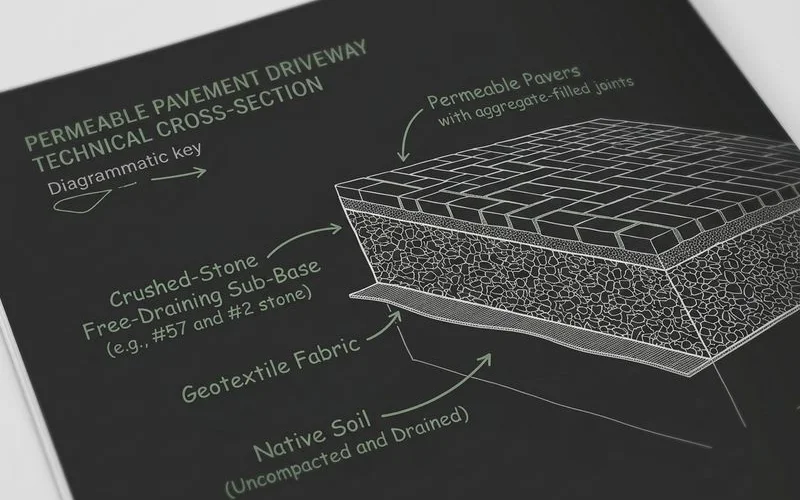
A permeable paving system relies on a very specific three-layer structure to manage water. It filters surface rainfall directly through open surface joints and stores it inside a crushed rock sub-base.
- Permeable surface: This includes porous pavers with wide 6 to 10mm joints, or porous concrete systems like TRUEGRID.
- Free-draining sub-base: This layer is packed with 20 to 40mm angular crushed rock to create essential void space for water storage.
- Underlying soil or drainage: Natural soil absorbs the infiltrated water, or a piped connection slowly releases it to a retention system.
Surface rainfall passes straight through the open joints into the crushed rock sub-base.
The system captures peak rainfall events instantly. This prevents massive volumes of water from rushing into Melbourne’s aging stormwater network.
Where Permeable Wins
Permeable paving dominates on properties that need stormwater compliance without the cost of underground retention tanks. It naturally absorbs rainfall to guarantee stormwater driveway compliance and save massive excavation fees.
Skipping Expensive Retention Infrastructure
On sloping residential blocks, adding large rainwater tanks or massive drainage pits creates a huge financial burden. Permeable paving manages compliance right at the surface level.
It captures the water where it lands. This immediate absorption often allows you to pass a Melbourne Water STORM assessment without extra engineering.
Meeting Tree Protection Zone (TPZ) Rules
Our crews frequently encounter mature gum trees protected by strict local laws. The Australian Standard AS4970-2009 caps traditional impermeable concrete at a 10% maximum incursion over a Tree Protection Zone.
Permeable driveways solve this problem. Systems like APC Permcon allow vital oxygen and water to reach the root zone.
Councils readily approve these porous surfaces to save heritage trees.
Delivering a Soft Contemporary Aesthetic
The wide joints and textured finish give permeable paving a distinct, organic appearance. It looks far less industrial than a standard grey concrete slab.
This softer visual style reads perfectly on semi-rural blocks in the north-east. The driveway integrates with the surrounding native landscape rather than dominating it.
Where Sealed Paving Wins
Sealed paving provides the essential structural integrity required for steep driveways and high-traffic zones. It captures fast-moving surface water and safely diverts it away from building foundations.
Managing Steep Gradients
Sloping blocks require careful gradient planning for safe vehicle access. The Australian Standard AS 2890.1 limits residential driveway slopes to a maximum 1:4 gradient, or 25%.
Permeable systems struggle on these extreme slopes because rapid surface water flows past the joints before it can infiltrate. Sealed paving captures this fast-moving runoff and safely directs it into grates.
Supporting Heavy Commercial Use
We recommend a sealed slab for areas experiencing intensive, daily traffic. Permeable pavers can shift or deform under repeated heavy turning loads from delivery trucks.
Solid concrete handles this constant stress without cracking.
Protecting Building Foundations
Tight urban blocks leave very little space between the driveway and your structural footings. Allowing thousands of litres of water to infiltrate near a foundation wall invites serious moisture problems.
Sealed paving safely transports water out to the street via established kerb-and-channel systems.
Matching Traditional Heritage Styles
Tightly jointed bluestone perfectly suits historic homes in the inner-eastern suburbs. The wider 10mm gaps required for permeable pavers often clash with classic Victorian architecture.
A sealed stone surface maintains historical accuracy.
Cost Comparison
A premium permeable driveway averages $180 to $280 per square metre, making it highly competitive with sealed systems once you factor in drainage costs. The upfront material price only tells half the story.
| Surface Type | 2026 Installed Cost | Important Notes |
|---|---|---|
| Permeable paver, premium | $180 to $280/m² | Includes free-draining sub-base |
| Permeable concrete, standard | $120 to $190/m² | Mid-grade materials and basic excavation |
| Sealed bluestone | $250 to $400/m² | Requires extra stormwater drainage costs |
| Sealed exposed aggregate | $90 to $170/m² | Requires extra stormwater drainage costs |
Our cost data reflects standard residential projects for the current year. When installing a permeable paver, Melbourne contractors typically charge less for drainage because the surface does the work.
You must add the price of laying pipes and digging retention pits to any sealed surface estimate. On many challenging sites, a high-quality permeable driveway finishes slightly cheaper than pouring standard concrete with full drainage infrastructure.
Maintenance
Permeable surfaces require vacuum sweeping every 3 to 5 years, while sealed concrete needs crack repair and resealing every decade. The right choice depends on your willingness to perform routine upkeep.
Caring for Permeable Surfaces
Permeable paving demands periodic joint cleaning to maintain its infiltration rate. You need to vacuum the surface every 3 to 5 years to remove fine silt and organic debris.
This specialized sweeping usually costs around $2.50 to $10 per square metre. You will likely need to top up the jointing gravel after a heavy clean.
Preserving Sealed Paving
Sealed paving avoids the vacuuming requirement but brings different long-term expenses. Concrete-based systems require crack repairs and a fresh coat of sealant every 10 to 15 years.
If you need help making the final call, our guide to the broader paving material decision breaks down the aesthetic options.
Owners dealing with steep inclines should check our steep driveway specifics before signing a contract. Call our design team today to evaluate your exact site conditions and secure your council permits.