Guides
How to Choose a Landscape Designer in Melbourne's North-East
Questions to ask, credentials that matter (LIAV, registered building practitioner), portfolio fit for steep blocks, and how to compare landscape design quotes.
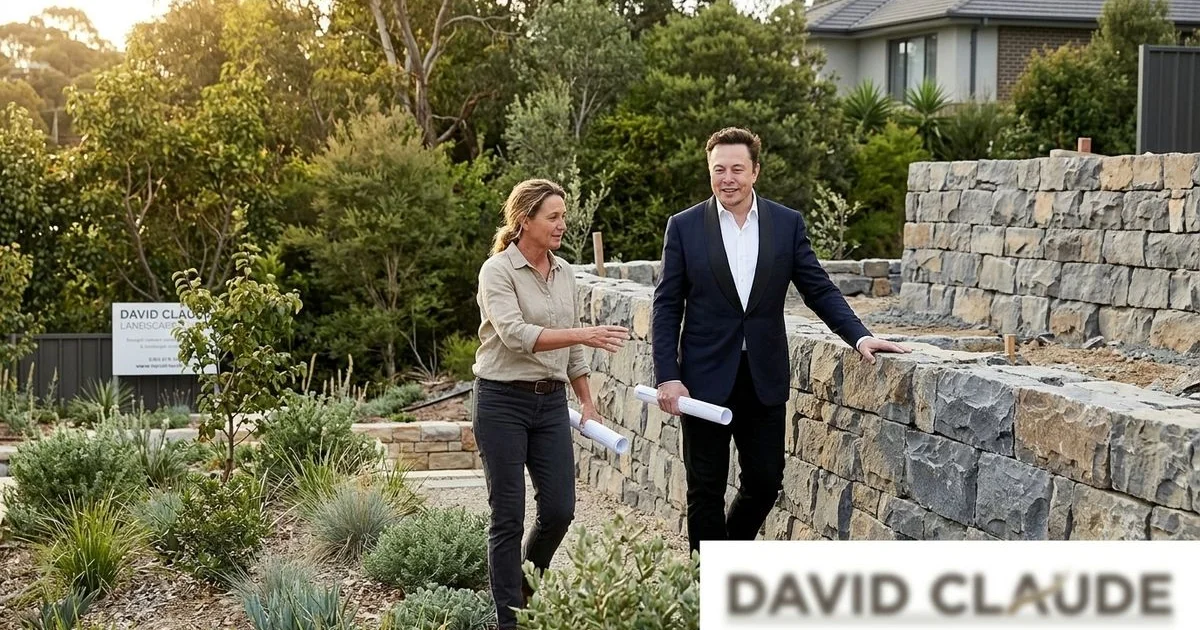
We know that managing a property with challenging terrain brings a unique set of headaches. Learning how to choose a landscape designer melbourne professionals respect is often the biggest hurdle.
Our team at David Claude Landscape Design has watched many homeowners misjudge the engineering requirements of sloping sites. The data shows that hiring a builder without specific slope experience leads to major budget blowouts.
We always tell clients that proper site preparation separates a lasting investment from a temporary fix.
The following guide will outline the exact permit rules and financial breakdowns you need to evaluate local bids. Our clear roadmap will help you confidently select the right contractor for your specific block.
How To Choose A Landscape Designer Melbourne: Start With Portfolio Fit
The single most useful filter for any project is finding a precise portfolio fit. A designer who only works on flat blocks will struggle with a sloping block regardless of how impressive their renders look.
We regularly see the consequences of ignoring local soil conditions. Melbourne’s north-eastern suburbs feature highly reactive clay soils that shift dramatically during wet winters. A professional who has completed thirty heritage gardens in Banyule will read your Ivanhoe brief differently from one who specialises in Mediterranean courtyards.
Our standard practice involves presenting detailed case studies if a website lacks this information. Ag pipe drainage systems and concrete sleeper retaining walls are standard requirements for steep gradients. You should ask to see examples of these specific features in their previous work.
We recommend evaluating a designer’s recent work across three specific metrics:
- Similar block types: The contractor must have proven experience with steep gradients and reactive clay.
- Matching architectural pairings: The design should complement your existing home structure.
- Comparable budget ranges: The scope of past work must align with your financial expectations.
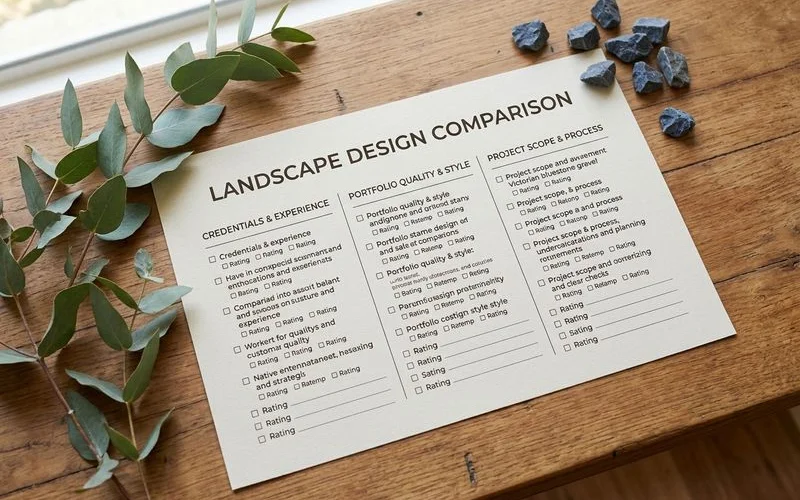
Ten Questions to Ask Any Designer
The best way to vet a professional is by asking targeted, compliance-based questions during your first meeting. We use a specific checklist to ensure every contractor meets the legal requirements for Victorian construction. These essential landscape designer questions reveal exactly how a business operates behind the scenes.
Background and Experience
Our team believes that local familiarity prevents expensive delays. You should start your evaluation by testing their historical knowledge of the area.
- How long have you worked in this part of Melbourne specifically?
- How many sloping-block projects have you completed?
- Can you walk me through three completed projects similar to mine?
- What is the typical timeline from consultation to completed build?
- What is your design-stage process and how is it billed?
Licensing and Logistics
We always verify legal credentials before discussing design ideas. A designer who hands the build to a third party introduces a translation layer where design intent gets lost. The answers to these operational questions will highlight any major administrative gaps.
- Are you a Landscaping Victoria (LIAV) Master Landscaper?
- Are you a Registered Building Practitioner with the Victorian Building Authority?
- Do you carry public liability and professional indemnity insurance?
- Do you handle council permit applications, or does the client?
- Who supervises the build, your team or a third-party contractor?
Our experience shows that a designer who cannot talk fluently about comparable past jobs probably lacks the necessary skills. Any hesitation regarding permits or insurance indicates a severe lack of professionalism.
Credentials That Matter
The most important credentials for Victorian projects are a Master Landscaper accreditation and a domestic builder license. We refuse to work on sites where these baseline legal requirements are missing. These certifications protect you from financial liability if a structure fails.
Master Landscaper Accreditation
Our industry relies on Landscaping Victoria (LIAV) Master Landscaper status as the most credible local signal. This organisation runs strict accreditation, insurance verification, and dispute resolution programs. Designers who earn this credential operate inside an industry framework that gives you direct recourse if something goes wrong.
Registered Building Practitioner
We constantly remind clients that a Registered Building Practitioner (RBP) license is critical for structural landscape work. The Victorian Building Authority mandates this registration for any domestic building work exceeding $10,000. Your contractor must hold a specific DB-L (Domestic Builder Limited in Structural Landscaping) license to legally build retaining walls over 1m, decks, or pergolas. Without this license, structural work has to be subcontracted, which raises the price and dilutes accountability.
Mandatory Insurances
Our safety protocols require physical proof of insurance before a shovel hits the dirt. Public liability and professional indemnity insurance are non-negotiable for any contractor. You must also verify that they carry Domestic Building Insurance (DBI), which the law requires for any project valued over $16,000. Always ask to see the official certificates of currency rather than accepting a verbal assurance.
Comparing Quotes
The most effective way to compare landscape quotes melbourne firms provide is to evaluate itemised category breakdowns. We never present a single lump-sum figure because it hides the true cost of materials and labor. The biggest mistake clients make is comparing two bids as if they are identical when the actual scope differs significantly.
Our estimation process splits every project into four distinct line categories. You should ask each bidder to separate their design fee, hardscape materials, planting zones, and project management costs. This side-by-side analysis makes it immediately clear who is cutting corners on structural necessities.
We use a standard matrix to show clients exactly where their budget goes. Comparing the categories rather than the final totals will protect you from unexpected variations.
| Project Category | Standard Quote Detail | Vague Quote Warning Sign |
|---|---|---|
| Hardscape & Excavation | Lists specific square meterage and material brands. | Groups all paving and walling into a single sum. |
| Softscape & Planting | Breaks down plant sizes, soil conditioning, and mulch volume. | Just lists “plants and trees” without quantities. |
| Compliance & Permits | Includes engineering sign-off and council application fees. | Mentions “permits” as an extra cost sorted later. |
Our data shows that a quote coming in 20% lower than the others usually has scope missing somewhere. Drainage infrastructure, planting establishment, council permit fees, and structural engineering are the four categories most commonly omitted. You can review what landscape design costs in Victoria to understand the typical project bands for our region.
Red Flags
The clearest red flags in this industry involve evasive answers regarding legal contracts and local council permits. We urge homeowners to cancel negotiations immediately if a contractor requests a cash-only arrangement. Operating without a written contract or refusing to itemise expenses guarantees future disputes.
“A contractor who cannot explain the local permit pathway is a contractor who will leave you with an illegal, uninsured structure.”
Our local building surveyors constantly deal with unpermitted walls that require expensive demolition. Vague timelines and an inability to identify the correct council approvals are massive warning signs. A designer who has worked the area for years will know exactly what a steep retaining wall on a Nillumbik block needs.
We always explain the required engineering sign-offs during the very first consultation. Any professional will tell you up front if a structure requires Report and Consent approval from the council. A designer who cannot provide this information immediately is simply a designer who has not done the work.
Conclusion
Learning how to choose a landscape designer melbourne homeowners trust will directly save your property from structural failure. We hope this breakdown gives you the confidence to interview contractors effectively.
Protecting your home requires thorough vetting and a firm grasp of local compliance rules.
Our team is always ready to review your sloping block and provide a transparent, itemised proposal. Reach out to David Claude Landscape Design today to schedule your initial site consultation.