Guides
Concrete Sleeper or Natural Stone Retaining Wall: Which Is Right?
Concrete sleeper vs natural stone retaining walls compared on cost, longevity, aesthetic and structural performance for Melbourne residential blocks.
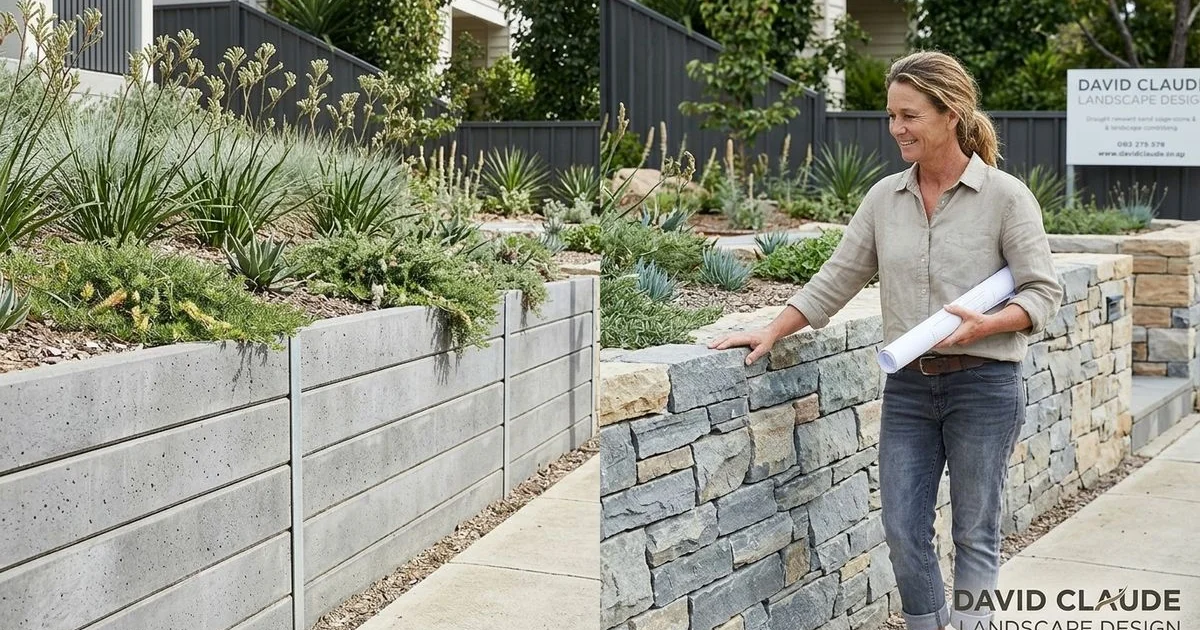
We notice the same tension on almost every sloping block across Melbourne. The soil needs holding back, but the budget needs managing.
Making the right choice between a concrete sleeper vs stone retaining wall dictates the entire flow of your landscaping project.
Our teams will break down the true costs and structural realities based on current 2026 pricing. Let’s look at the data and explore a few practical ways to respond.
The Choice in One Sentence
Concrete sleeper retaining is structural, fast, and budget-sensitive. Natural stone retaining is premium, slow, and visually striking.
Both systems deliver structurally sound retaining when you design and drain them correctly. Concrete sleepers are appropriate for back-of-block, budget-conscious, or low-visibility walls.
We source locally quarried central Victorian bluestone for these premium long-horizon investments. Homeowners in Melbourne’s north-eastern and inner-eastern suburbs often face challenging terrain that requires serious soil retention. You must secure a building permit and structural engineering certification in Victoria for any retaining wall over one metre high.
Our design process factors this engineering requirement into every initial quote. This council regulation applies regardless of which material you choose.
Key differences at a glance:
- Concrete sleepers prioritise speed and cost.
- Natural stone prioritises timeless aesthetics.
- Both require engineering over a one-metre height.
How Each System Works
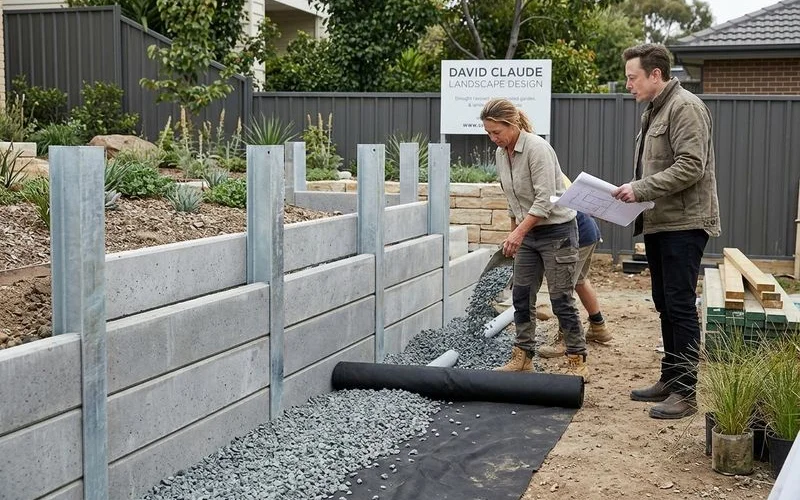
Concrete sleepers slide into steel channels for rapid structural support, while natural stone requires block-by-block mortar or gravity-fed dry-stacking.
Concrete sleeper retaining uses pre-cast reinforced concrete sleepers stacked horizontally between hot-dip galvanised steel H-posts. The industry standard size is 200x75x2400mm. The H-posts are concreted deep into structural footings, and the sleepers slot perfectly into the channel of each post.
We typically specify 100UC steel posts weighing 14.8 kilograms per metre for standard 75mm sleepers to ensure maximum stability. The system is structurally rated, fast to install, and widely used on Melbourne residential blocks at all price points. Melbourne’s reactive clay soils expand and contract, making this deep steel footing critical for preventing wall failure.
Traditional Stone Methods
Natural stone retaining is built entirely block by block. Bluestone remains the most-used premium stone in Victoria. Quarries in central Victoria supply the stone, which masons then dress to size and lay in mortar with structural footings.
Dry-stack stone uses gravity and precise stone fitting without any mortar. This technique creates a highly rustic, organic appearance. Both natural stone methods demand incredibly slow, skilled work from experienced stonemasons.
Our masonry teams spend weeks carefully cutting and placing individual stones for a large project. This intense labour requirement is the primary reason stone walls carry a premium price tag.
Cost Comparison
Concrete sleepers cost significantly less, running roughly $450 to $700 per linear metre, whereas mortared bluestone demands $1,500 to $2,800. The visible difference once finished is substantial, but both deliver excellent structural performance.
Materials and labour are the two main factors driving your retaining wall quotes in 2026. Bluestone runs roughly three to four times the cost of a concrete sleeper system for the exact same wall geometry.
We always advise clients to budget an additional $600 to $1,200 for structural engineering fees if the wall exceeds one metre in height. This engineering cost applies equally to both concrete and stone options.
| Material | Cost per linear metre |
|---|---|
| Concrete sleeper, galvanised H-post | $450-$700/lm |
| Concrete Besser blocks, core-filled | $550-$750/lm |
| Rendered masonry, painted finish | $700-$1,200/lm |
| Dry-stack natural stone | $1,200-$2,400/lm |
| Sandstone block | $1,400-$2,400/lm |
| Bluestone, mortared | $1,500-$2,800/lm |
Concrete Besser blocks provide a mid-range alternative for homeowners wanting a smooth finish without the premium stone price. Core-filled Besser blocks require extensive steel reinforcement, pushing their price slightly above standard concrete sleepers.
Our quoting process provides a clear retaining wall material comparison so you can see exactly where your budget goes. Finding the best retaining wall material for your site comes down to where you want to allocate your landscaping funds.
Longevity
Both materials provide multi-decade durability, with concrete sleeper systems rated for 50-plus years and natural stone lasting indefinitely. The practical longevity difference rarely matters for most residential homeowners.
Concrete sleeper systems achieve their massive lifespan when properly installed with hot-dip galvanised posts and high-strength concrete. We exclusively use 40MPA or 50MPA rated concrete sleepers to guarantee they withstand lateral soil pressure.
A 50-year wall easily outlasts most ownership cycles and most home renovations. Natural stone retaining lasts effectively forever if the drainage is right and the structure is sized properly to the slope.
The Hidden Threat to Wall Lifespans
Poor drainage is the number one cause of retaining wall failure in Melbourne. A buildup of hydrostatic pressure behind the wall will eventually push over even the strongest steel posts or mortared stone.
Our installation crews install a dedicated agricultural drain and a minimum of 300mm of clean crushed rock backfill behind every wall. This allows water to escape freely and prevents soil from turning into heavy mud against the structure.
You must prioritise this invisible drainage work over the visible materials. A beautiful bluestone wall will still fail if the water has nowhere to go.
Aesthetic Considerations
Concrete sleepers deliver a linear, industrial look, while natural stone offers a timeless, premium aesthetic. Visible feature walls usually warrant the stone investment because you will see the wall daily.
Standard concrete sleeper retaining reads heavily industrial, featuring straight horizontal lines, visible steel H-posts, and grey concrete. It suits contemporary architecture, semi-rural settings, and back-of-block locations where the visual impact is minimal.
We also offer wood-grain or textured concrete sleeper finishes to soften the harsh industrial appearance. These textured options cost slightly more but provide a warmer feel for visible boundaries.
Natural stone retaining reads entirely premium and suits specific settings:
- Bluestone perfectly complements contemporary and heritage homes across Melbourne.
- Dry-stack styling suits traditional and bushland settings.
- Sandstone works beautifully for warm-toned landscape projects.
The Rendered Alternative
The mid-range option is rendered masonry, which utilises concrete block construction with a smooth render. This surface is entirely paintable in any colour you choose.
Our clients often choose this rendered finish to match their home’s exterior facade perfectly. It reads contemporary and clean, falling squarely between the basic concrete sleeper and natural stone in cost.
When to Mix Materials
Combining stone in visible areas and concrete sleepers in hidden zones halves your material costs while maintaining structural integrity. This mixed approach is highly effective for challenging terrain.
We frequently specify bluestone or natural stone retaining for the front-yard, side-yard, and highly visible terraces. These are the premium walls that clients, guests, and neighbours see every single day.
Concrete sleeper walls are ideal for the back-of-block retaining where the structure sits hidden by planting or directly behind the house. This mixed approach drastically extends your landscaping budget.
A whole-block bluestone retaining program might run $400,000 to $700,000 on a substantial sloping property, whereas a mixed approach can reduce that cost to $200,000 to $350,000.
Our hybrid material strategy delivers half the cost for the exact same retaining performance and 80 percent of the visual impact. You get the premium look where it matters most.
For the structural drainage detail, refer to the dedicated guide. For the broader retaining wall service, explore the main hub.
We encourage you to review your site plans and consider this hybrid approach for your next property upgrade. Taking action early on your concrete sleeper vs stone retaining wall decision ensures your soil remains stable before the wet season hits. Contact our design team today to schedule your initial site consultation.