Guides
Retaining Wall Permits in Banyule, Nillumbik and Manningham
What retaining wall heights trigger council permits, when engineering certificates are required, and how boundary walls and heritage overlays change the rules.
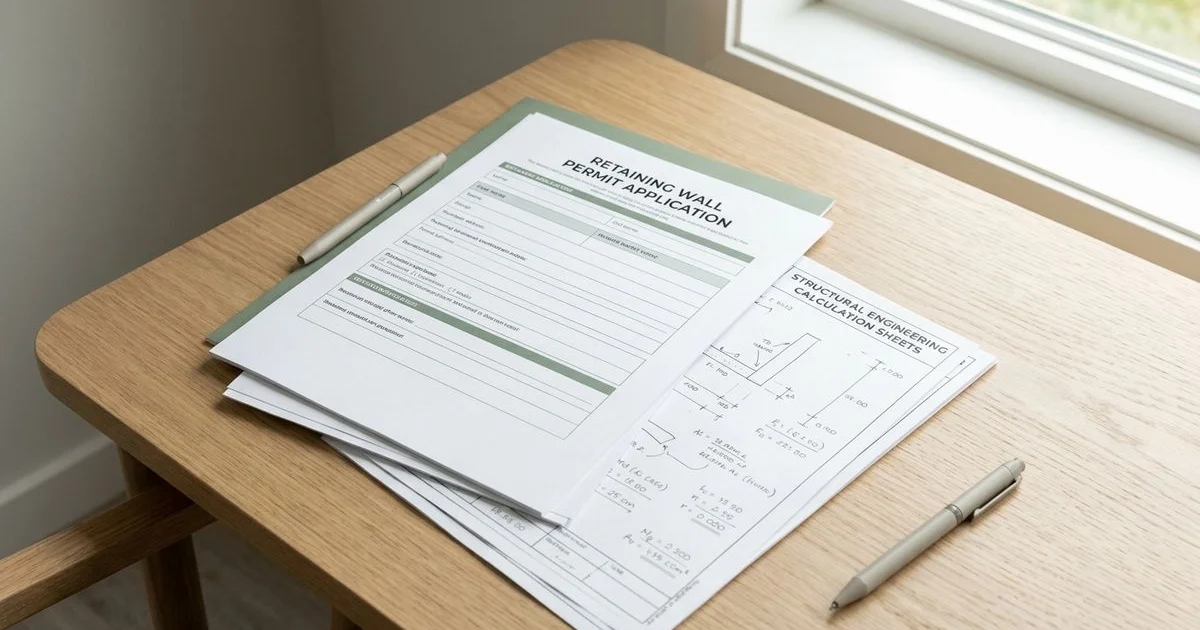
Terrain in Melbourne’s northeast makes retaining walls essential for functional outdoor spaces. You know how quickly a simple landscaping project stalls once council regulations get involved. Securing a retaining wall permit banyule nillumbik often feels like a frustrating hurdle.
This delay costs time and money.
Our team at David Claude Landscape Design handles these exact approvals daily. The guide below breaks down the specific height triggers, local council quirks, and exact steps required to get your wall approved legally and efficiently.
What Triggers a Retaining Wall Permit Banyule Nillumbik
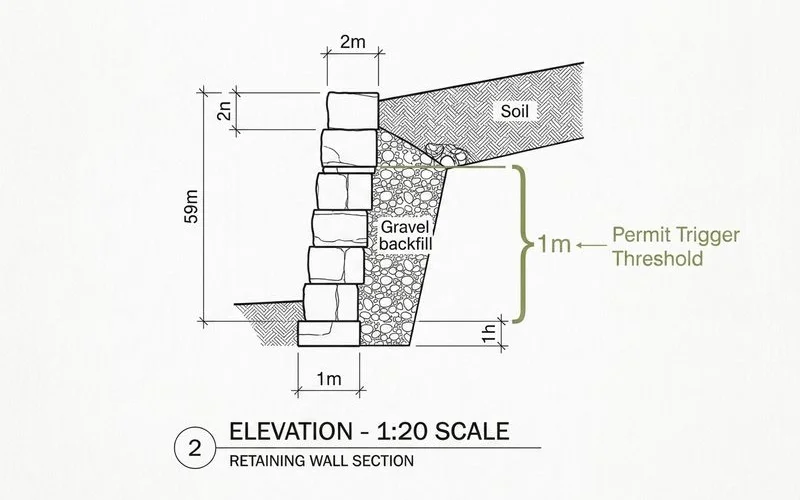
Under Victorian Building Authority (VBA) regulations, any residential retaining wall over 1m in height requires a building permit. Walls above this height also need an accompanying structural engineering certificate.
The threshold is not always exactly 1m, as several specific site conditions can shift this requirement.
Our designers map out the correct permit pathway during your initial consultation so there are no surprises later. These specific factors often trigger different rules:
- Boundary location: Walls within 1m of a property boundary frequently trigger lower height thresholds and require neighbour notification.
- Heritage overlay: Properties in older precincts might require a planning permit before securing a retaining wall building permit melbourne, even for low walls.
- BMO bushfire overlay: Significant earthworks within a Bushfire Management Overlay can initiate separate assessment processes.
- Adjacent public space: Construction near council drains or easements requires Build Over Easement consent.
- Reactive clay soils: Suburbs like Eltham sit on Class M-H reactive clay, requiring specific footing depths regardless of the height.
Council application fees for these permits typically range from $500 to $1,500 in 2026. We handle the submission process to keep everything compliant.
Council-Specific Detail
Each local municipality publishes its own specific guidelines and overlay restrictions for retaining wall council approval. The City of Banyule, Shire of Nillumbik, and City of Manningham all share the 1m building permit baseline but differ greatly in their planning rules.
Our local experience means we know exactly how to interpret these subtle variations. The table below outlines the core differences you will encounter.
| Council | Standard Trigger | Critical 2026 Local Considerations |
|---|---|---|
| City of Banyule | Walls >1m | Heritage overlays apply heavily in Ivanhoe and Heidelberg. The 2024 Draft Neighbourhood Character Strategy strongly prefers timber or basalt finishes. |
| Shire of Nillumbik | Walls >1m | Class M-H reactive clay soils mandate specific engineering. The Significant Tree Register requires root barriers for walls near mature trees. |
| City of Manningham | Walls >1m | Strict hillside development controls apply to steep blocks. Building near Yarra River setbacks requires separate environmental assessments. |
We deal with all three councils regularly to expedite your paperwork. Your site conditions will dictate which specific local laws apply to your project.
Engineering Certificates
A registered structural engineer must certify the design for any wall exceeding the 1m trigger height. This certificate ensures the structure complies with the AS 4678 standard for earth retaining structures.
Our landscape architects coordinate this engineering phase directly as part of your design package. The engineer confirms three crucial elements before council will review the application:
- The wall size safely handles the expected lateral soil pressure.
- The footing design accounts for the specific local soil profile.
- The drainage system prevents hydrostatic pressure buildup.
Local soil types heavily influence the final design and cost. Melbourne’s eastern and northern corridors feature highly reactive clay soils that expand when wet. This clay places immense lateral pressure on structures, often requiring 600mm deep footings instead of the standard 300mm.
Engineering input usually adds $600 to $1,500 to your upfront project costs. Turnaround time for straightforward structural drawings and calculations averages about seven days. We factor this timeline into your project schedule from the start.
Boundary Wall Notification
Building on or near a property line requires formal neighbour notification under Part 7 of the Victorian Building Regulations 2018. Most local councils mandate this Protection of Adjoining Property process for boundary walls exceeding 600mm in height.
Our team manages all the necessary notification paperwork to protect your relationship with your neighbours. The formal process ensures adjacent owners understand the proposed earthworks and gives them a structured way to respond.
Local Expert Tip: Never rely on a verbal agreement for a boundary wall. Always secure a signed consent form. Documented agreement proves the structure is legally accepted, which prevents costly disputes and title issues when selling your home in the future.
We handle these exact compliance steps so you do not have to worry about the legal details.
Heritage Overlay
Properties located in heritage overlay zones require a planning permit prior to applying for a building permit. Councils use this planning phase to assess whether the proposed wall visually respects the historical character of the street.
Our designers work closely with planning departments in heritage areas like Ivanhoe East and central Eltham. Material selection, scale, and surface finish are heavily scrutinized during this review. The recent Banyule Heritage Study Amendment C165 tightened these aesthetic controls significantly.
Certain materials will pass inspection much faster than others. Your material choices generally fall into two categories for visible front-yard projects:
- High Approval Rates: Natural bluestone, dry-stack stone, and traditional timber sleepers.
- High Rejection Rates: Standard concrete sleepers and highly modern rendered masonry.
We direct you to sympathetic materials early in the concept phase. This strategic material choice prevents costly redesigns and months of council delays.
Permit Timelines
Standard residential retaining wall permits take between 4 and 8 weeks from application submission to final issue. Complex sites with specific overlays will stretch this timeline out considerably.
Our project managers build these exact waiting periods into your construction schedule. You should expect the following average processing times in 2026:
- Standard Building Permit: 4 to 8 weeks.
- BMO Compliance Assessment: Additional 2 to 4 weeks.
- Heritage Overlay Planning Permit: 6 to 12 weeks.
We refuse to start any site excavation until the final stamped permits are securely in hand. Proceeding without approval risks heavy council fines and forces you to halt the project entirely.
For more information on outdoor renovations and structural safety, explore our dedicated resources:
- Read about the broader council permit context to plan your entire landscape.
- Understand the critical role of drainage behind retaining walls to prevent structural collapse.
Securing a retaining wall permit banyule nillumbik does not have to be a painful process.
Reach out to our design team today to discuss your site, and let us handle the compliance paperwork for you.