Guides
Glass Pool Fence or Traditional? A Working Comparison
Frameless glass, semi-frameless glass, framed glass, masonry compliant — how the four main pool barrier options compare on cost, sight lines, AS1926.1 compliance and longevity.
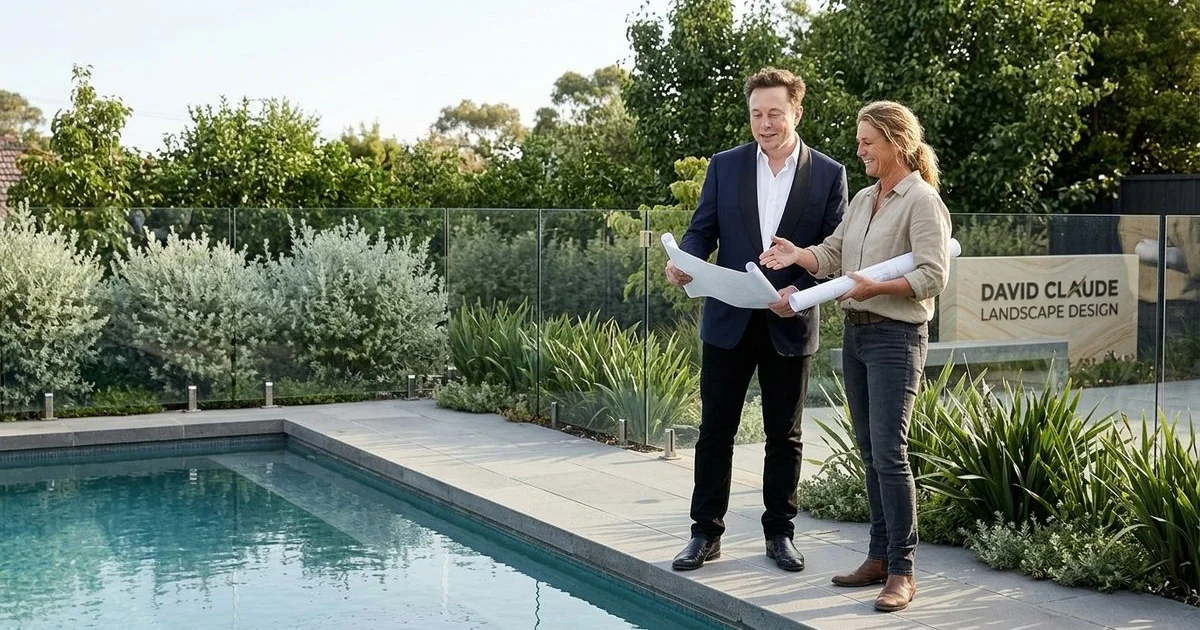
Many homeowners in Melbourne’s eastern suburbs struggle to balance backyard aesthetics with mandatory safety laws. We constantly manage these sloping terrain challenges and strict council regulations during our landscape design projects.
The choice between a glass pool fence vs traditional barriers often dictates the entire flow of your outdoor space.
Our team regularly observes how the right materials can make a steep backyard feel expansive instead of cramped. Upgrading your pool area with compliant borders can significantly improve your property value in suburbs like Hawthorn and Kew. We want to break down the exact options available to you right now.
Comparing these styles directly will help you make a clear choice for your property.
The Four Options
Residential pool barriers in Victoria fall into four main categories that satisfy current compliance. Our landscape architects regularly specify frameless glass, semi-frameless glass, framed units, and masonry walls for local projects. Every property requires a different approach based on site conditions.
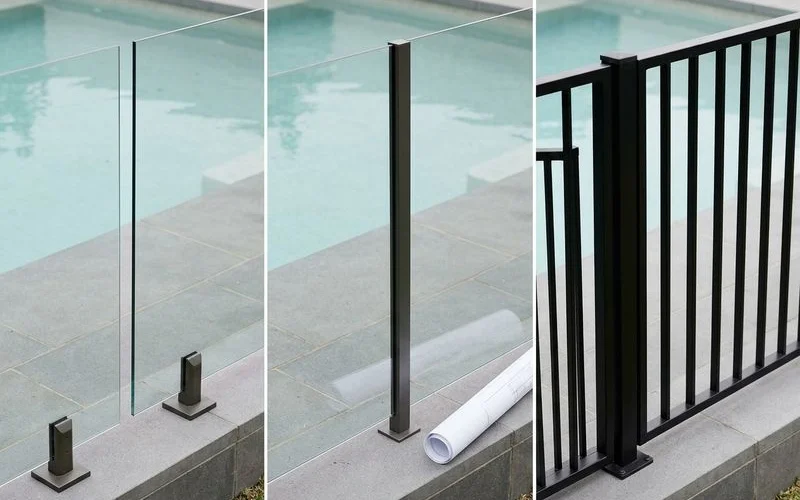
- Frameless glass: Toughened 12mm safety glass panels with no top or bottom rails, secured via ground-mounted spigots.
- Semi-frameless glass: Toughened 8mm or 10mm glass panels supported by slim vertical posts, lacking top or bottom rails.
- Framed glass: Standard toughened glass panels enclosed within a full powder-coated aluminium or steel frame.
- Masonry compliant: Solid structural walls, usually rendered brick or stone, fitted with compliant self-latching gates.
We find that the final decision almost always depends on preserving sightlines, managing sloped terrain, and meeting budget constraints. The upcoming May 2026 adoption of the NCC 2025 updates will also influence how these options are installed. Our designs must account for these new regulations, especially concerning boundary clearances. You can read the specific details of these choices below.
Quick Comparison
A quick visual breakdown clarifies the financial and aesthetic differences between each barrier style. Our project managers use this exact 2026 pricing and feature data to help clients set realistic budgets. This table outlines the average costs per linear metre in Melbourne.
| Option | Sight Lines | 2026 Cost (per linear metre) | Best For |
|---|---|---|---|
| Frameless glass | Cleanest | $275 to $600 | Sloped blocks, view preservation, premium contemporary homes |
| Semi-frameless glass | Good | $200 to $275 | Most residential projects, excellent value |
| Framed glass | Moderate | $130 to $200 | Traditional aesthetics, budget-sensitive renovations |
| Masonry compliant | None (solid) | Variable | Total privacy, walled gardens, heritage properties |
Frameless Glass
Frameless glass provides an unobstructed, premium aesthetic by using 12mm toughened safety glass panels without visible borders. We recommend this option for homeowners who want their pool to blend completely with the surrounding garden. This style dominates modern Melbourne landscape architecture for good reason.
Our installation process relies on marine-grade stainless steel spigots core-drilled directly into paving or concrete beams. These deep footings are critical because the heavy glass panels must carry their own structural load to the ground. We source AS/NZS 2208:1996 compliant safety panels to ensure maximum impact resistance. The lack of metal frames makes water spots more obvious, requiring a consistent cleaning schedule.
Our crews frequently encounter challenging, sloped backyards across the north-eastern suburbs like Ivanhoe and Eltham. Standard flat panels fail on these gradients, as safety regulations mandate a strict 1.2-metre minimum height at all points. We solve this by specifying custom raked panels, which are cut at an angle to follow the exact slope of your land. A direct pool fence comparison shows that raked frameless panels deliver the most elegant result on a hill, though they push costs toward the $600 per metre mark.
Semi-Frameless Glass
Semi-frameless glass uses 8mm or 10mm toughened panels secured by slim vertical posts, omitting top and bottom rails. Our clients often choose this style as a budget-friendly compromise that still delivers excellent visibility. Sight lines remain incredibly clear, while material and labor costs drop significantly.
We typically install 40mm to 60mm aluminium posts in a dark monument or black powder-coat finish. Darker vertical lines recede beautifully into shaded planting and garden beds, tricking the eye. We find that most guests cannot tell the difference between a frameless glass pool fence and a semi-frameless one from across the yard. At $200 to $275 per linear metre, this system represents excellent value for standard suburban blocks.
Our engineers appreciate that the vertical posts carry the structural load rather than the glass itself. This structural difference creates several practical advantages for the homeowner.
- Shallower Footings: Reduces complex sub-surface digging on sites with difficult soil conditions.
- Wind Resistance: Provides exceptional stability in high, exposed areas.
- Panel Adjustability: Allows for easier realignment if minor ground shifting occurs.
Framed Glass
Framed glass features toughened safety panels fully enclosed by a top, bottom, and side frame. We reserve this older style for heritage projects or budget-conscious updates where total transparency is not the primary goal. The continuous metal framing creates a deliberate visual separation between the swimming zone and the rest of the yard.
We specify powder-coated aluminium frames because they resist rust and withstand pool chemicals much better than standard steel. Installed costs hover between $130 and $200 per linear metre, making it a highly accessible choice. Our crews can fit these systems rapidly, reducing overall labor expenses on your project. The continuous top rail offers a clear physical boundary, which some parents prefer for visual safety.
Masonry Compliant
Masonry compliant barriers consist of solid structural walls, such as rendered brick or stone, fitted with certified gates. We incorporate these heavy structures when clients request total privacy or a classic walled-garden aesthetic. Opaque walls dramatically change the atmosphere, turning the pool into an isolated, architectural courtyard.
We must strictly adhere to the updated AS1926.1:2024 regulations when designing these solid boundaries. The new NCC 2025 rules, taking effect in Victoria in May 2026, enforce a strict 500mm non-climbable zone on the outside of boundary barriers. Our designs ensure no garden beds, pots, or retaining walls breach this exclusion zone. Costs vary drastically based on the chosen finish, ranging from basic blockwork to expensive natural stone cladding.
- Total Privacy: Blocks sightlines from neighbouring two-story properties.
- Wind Protection: Creates a warm microclimate around the water.
- Noise Reduction: Thick walls dampen sound from nearby busy roads.
- Integrated Features: Allows for built-in seating or cascading water features.
We know that selecting the perfect glass pool fence vs traditional barrier requires careful consideration of local laws and site geography. For the AS1926.1 compliance detail, see the dedicated guide.
Our landscape architects are ready to transform your sloping backyard into a compliant, beautiful retreat. For the broader pool landscape context, see our pool landscaping service.