Guides
AS1926.1 Pool Fencing Requirements: A Plain-Language Guide
What AS1926.1 actually requires for residential pool barriers in Victoria — fence height, the non-climbable zone, gate self-closing requirements and inspection.
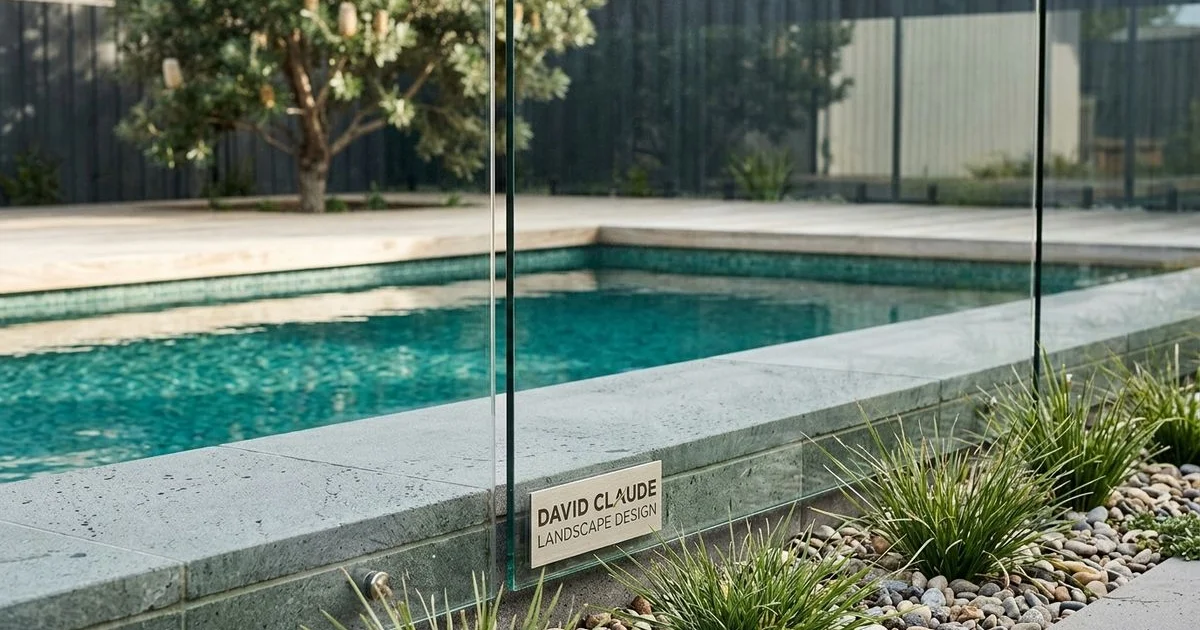
We know how quickly a simple backyard project can turn into a headache when dealing with the strict pool fencing requirements Victoria enforces.
Recent 2026 industry data reveals that about 60 percent of Victorian properties fail their first Form 23 compliance inspection for an AS1926.1 pool barrier. This high failure rate highlights why following the technical specifications is absolutely critical.
Our design team uses the current AS1926.1-2012 standard to guide every single structural decision. Getting these exact measurements right from day one prevents expensive teardowns. Let’s review the specific rules catching out local homeowners and explore how to secure your approval.
What AS1926.1 Actually Requires: Pool Fencing Requirements Victoria
We see homeowners hit with on-the-spot fines of $330 because they miss the specific barrier rules. The standard dictates the safety codes for any private residential pool holding more than 300mm of water. The five most-cited requirements in residential design include:
- Barrier height: A minimum 1200mm above finished ground level on the outside of the fence.
- Gap below the barrier: A maximum 100mm space between the bottom of the fence and the ground.
- Gap between vertical members: A maximum 100mm gap so a child cannot squeeze through.
- Self-closing gate: The entry opens outward only, with the latch sitting at a minimum 1500mm height.
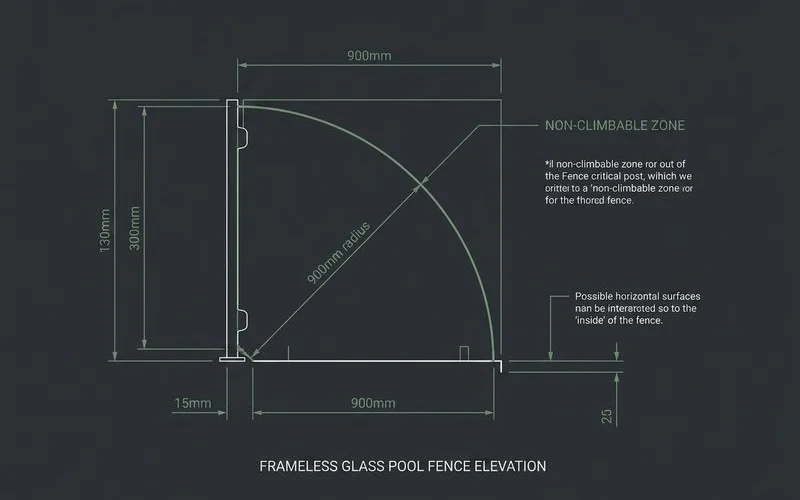
- Non-climbable zone (NCZ): A 900mm area outside the fence kept clear of climbable surfaces.
Our planting plans and material choices always prioritize these strict regulations over basic aesthetics. Coping width, plant setbacks, and structure placements must serve safety compliance first. You simply cannot ignore these parameters when dealing with challenging terrain in Melbourne’s north-eastern suburbs.
We map out these zones carefully before a single shovel hits the dirt. Using precise topographical surveys ensures the ground levels match the fence heights perfectly. Below is a clear visual representation of how this works in practice.
The Non-Climbable Zone in Detail
We find that the non climbable zone pool fence rules catch most retrofit projects completely off guard. This 900mm arc outside the fence must be completely free of any surface a child could use to climb. Local inspection data shows that NCZ breaches account for 25 percent of all first-inspection failures in Victoria.
Our builders constantly have to relocate planter boxes and retaining walls that sit inside this restricted area. The practical implications for your backyard layout are extensive. Here are the most common everyday objects that trigger a compliance failure:
- Outdoor furniture: Chairs, benches, or barbecues left too close to the glass.
- Garden beds: Retaining edges that sit too high inside the zone.
- Plantings: Shrubs and bushes that grow thicker than 50mm and act as footholds.
- Structural posts: Pergola supports or low boundary fences within the arc.
- Pool equipment: Pumps and storage boxes placed flush against the barrier.
We always design the NCZ as a primary input so your coping, plants, and structures sit safely clear. Retrofitting an older garden often means you must lower retaining edges and rip out mature plants. Another crucial regulation requires that any steps or level changes must be set back at least 500mm from the barrier.
We strongly suggest walking your perimeter with a tape measure before your four-year renewal date approaches. Taking this proactive step gives you time to trim branches before the inspector arrives. A compliant garden requires ongoing maintenance throughout the changing seasons.
Gates
We focus heavily on pool gates because they are the absolute highest-failure point in residential safety checks. The standard requires the entry to be self-closing, self-latching, and completely incapable of opening inward. A child pushing on the inside simply cannot force an outward-swinging gate open.
Our installation process includes setting the latch at a minimum 1500mm height to keep it out of reach. Worn gate self-close springs actually cause roughly 35 percent of all inspection fails across the state. Latch height drift over time causes another 10 percent of properties to fail their safety checks.
We only source marine-grade stainless steel components that hold up against heavy use and Melbourne weather. To help you prepare, this table outlines the most frequent hardware failures and the necessary checks:
| Failure Type | State Failure Rate | Required Preventative Action |
|---|---|---|
| Worn self-close springs | 35% | Test swing from a 5-degree open position. |
| Latch height drift | 10% | Measure latch center to finished ground (min 1500mm). |
| Hardware corrosion | under 5% | Inspect hinges for rust and lubricate every six months. |
You must regularly check the hinge tension with a simple swing test every few months.
We recommend adding this quick functionality test to your regular garden maintenance routine. A functioning entry point is your best defense against an accidental drowning. It also prevents the headache of receiving a formal non-compliance notice from the city.
Coping Setback
Our material choices always factor in the coping width because it directly impacts your compliance. The safety barrier sits right at the edge of the stone, projecting the 900mm NCZ outward from that line. Honed bluestone coping at a 300 to 400mm width is the standard choice for modern geometric pools.
We use these specific dimensions to ensure the stone itself does not create an illegal stepping point.
If the coping extends wider than 150mm outside the fence line, inspectors classify it as a step.
This single mistake triggers an immediate NCZ violation during your safety assessment.
Our masonry team details wider surrounds very carefully to eliminate any chance of creating an accidental foothold. You have to maintain a minimum 300mm clear space on the inside of the fence as well. Keeping potted plants and loose items away from the splash zone protects your certification status.
The Inspection Process
We coordinate the entire inspection as part of the construction project so you receive your paperwork at handover. A registered pool-safety inspector must assess the completed barrier and issue a Form 23 Certificate of Barrier Compliance. This exact document is registered with the local council and must be active before the pool is filled.
Our clients appreciate knowing the bureaucratic hurdles are cleared before they plan their first swim. Victorian law outlines a strict timeline for maintaining your approval status:
- Initial Approval: Form 23 must be lodged within 30 days of the certificate issue date.
- Re-inspections: Mandatory checks must occur every four years after the initial registration.
- Rectification Period: You generally have up to 60 days to fix a fault before a non-compliance certificate is lodged.
Missing these deadlines can result in heavy council fines.
We highly recommend performing your own visual audit a few weeks before your deadline hits. For the glass vs traditional fence comparison, you should see the dedicated guide. For the broader pool landscaping context, review the main hub page.
We are ready to review your current backyard setup if you need help meeting these pool fencing requirements Victoria demands. Taking action now ensures your property remains safe and fully certified. Contact the design team today to schedule an on-site consultation and secure your pool area.