Guides
Single Retaining Wall vs Terraced Garden: Which Suits Your Slope?
When does a single tall retaining wall work better than tiered terracing — and when does terracing produce a better result for the same gradient and budget?
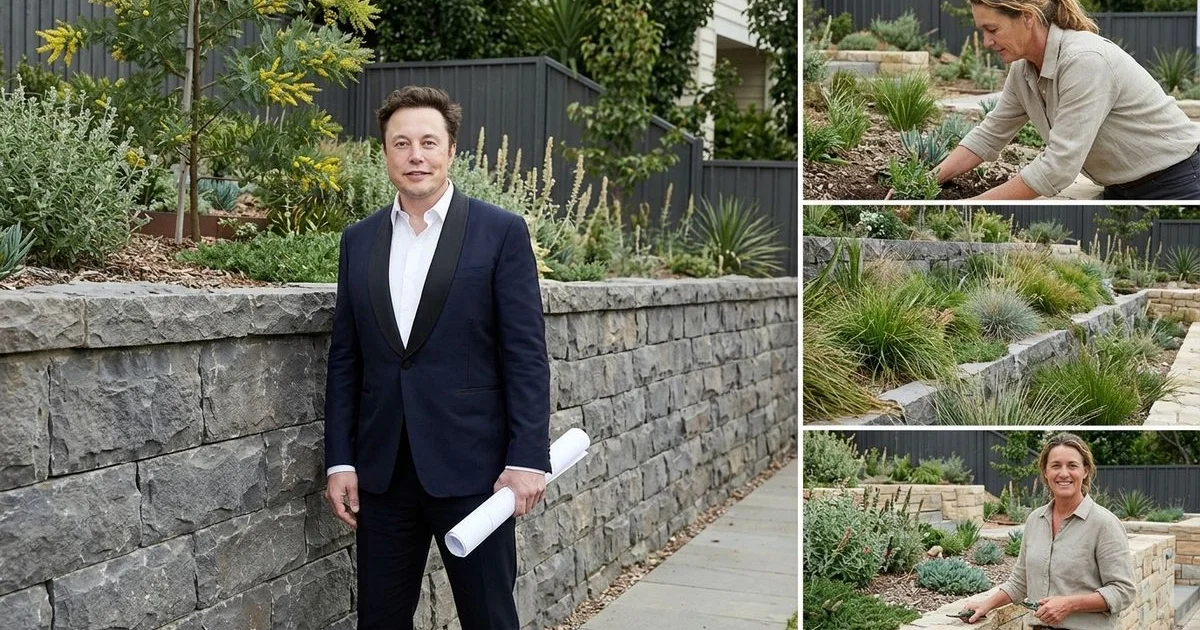
The Choice in One Sentence
We frequently see Melbourne homeowners struggling to tame steep, sloping backyards. The heavy basalt clay soils in Melbourne’s north-eastern suburbs make this terrain particularly tricky to manage. Deciding between a retaining wall vs terraced garden is the biggest structural choice you will make for your property.
Our team at David Claude Landscape Design approaches this decision by looking at both aesthetics and Victorian Building Authority regulations.
A single tall retaining wall holds the slope as one major structural element. Tiered terracing breaks that same height into smaller walls, usually separated by planted or paved bands.
We know both methods work effectively, but they produce completely different cost structures and permit profiles. Let’s look at the specific data to help you decide which approach makes the most sense for your block.
When Tiered Terracing Wins
Tiered terracing wins in the vast majority of residential landscaping projects. Three tiered terraces of 800mm each easily retain the same vertical drop as a single 2.4m structure.
We strongly recommend this method because it completely changes how you interact with your yard. Instead of staring at a massive concrete face, you gain three distinct, usable garden zones. Terraced garden design softens the visual transition with planting bands or paved paths between each level.
Our clients in suburbs like Doncaster and Eltham prefer this approach to break up the intense visual bulk of steep slopes.
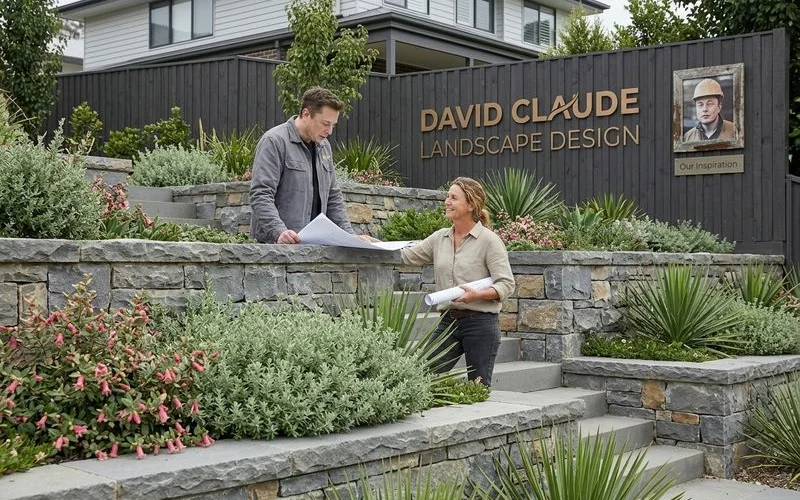
The permit advantage provides another massive benefit for Victorian homeowners. As of 2026, the Victorian Building Authority requires a formal building permit for any retaining structure exceeding 1 metre in height.
We save you money and time by keeping individual terrace walls at 800mm, staying safely under that council trigger. A single 2.4m wall automatically demands a permit, engineering certificates, and a registered building surveyor. Stepping the slope down completely removes this administrative headache.
Our experience highlights three specific situations where terracing is the absolute best choice:
- Period homes and contemporary architecture: The staggered design complements traditional aesthetics far better than a blank, imposing facade.
- Sloping bushland blocks: Terracing mimics natural topography, allowing indigenous plants to thrive on flat levels.
- Projects avoiding heavy machinery: Smaller walls require less excavation, protecting established tree roots on your property.
When a Single Tall Wall Makes Sense
A single tall wall makes perfect sense when you face tight boundary restrictions or strict budget limits on linear meterage. Comparing a single wall vs terraces requires looking at the raw geometry of your property line.
We find that certain block layouts simply cannot accommodate the horizontal spread of multiple tiered levels. The structural footprint of terracing eats up valuable backyard real estate. A single, sturdy structure reclaims that space for lawns, pools, or patios.
Our construction teams regularly rely on a single tall face in three specific scenarios:
- Hard boundary defence: When the slope drops directly to a neighbour, a single wall holds the property line cleanly. Terracing across a boundary is rarely possible and often violates local council setback rules.
- Budget constraints on linear metres: Funding 10 linear metres of a single wall is cheaper than funding 30 linear metres across three separate terraces. The visual compromise is real, but the slope is effectively held.
- Architectural pairing: Contemporary homes with clean concrete slabs and single-material rendering read better against a single, dramatic face. This design-led choice often utilises premium materials like textured concrete Besser blocks.
Getting approval for these tall structures requires precision. Council regulations dictate that the owner who benefits from the earthworks takes responsibility for the build.
We always advise discussing boundary projects with neighbours early to avoid costly legal disputes.
Engineering Considerations
Engineering requirements scale dramatically as your retained height increases. A single wall over 1 metre needs formal structural engineering certification from a registered practitioner.
Our engineers note that wall height drives the structural load non-linearly. A 2-metre barrier needs disproportionately more steel reinforcement than a 1-metre version because the moment load increases with the square of the height. Melbourne’s inner-eastern suburbs feature highly reactive Class M-H basalt clay soils that shrink and swell with the seasons.
We see how these soil movements place immense lateral pressure on tall, rigid boundaries. Terracing breaks up this massive soil load effectively. Three 800mm walls have minimal engineering requirements because each one holds back a very small amount of earth.
We utilise smaller footing depths and simpler steel frameworks for these tiered setups. The required building labour is straightforward, reducing the need for expensive specialist trades on site. This dispersed load method handles reactive clay far better than a single, massive concrete pour.
Our standard engineering assessments highlight the stark differences between the two methods:
| Feature | Single Tall Wall (2.4m) | Tiered Terraces (3x 800mm) |
|---|---|---|
| VBA Permit Required | Yes (Mandatory) | Generally No |
| Engineering Certificate | Required | Not Required |
| Footing Depth | Deep (often 1m+) | Shallow (typically 400mm) |
| Soil Load Distribution | Concentrated at base | Dispersed across levels |
| Lateral Clay Pressure | High risk of bulging | Low risk per wall |
Drainage Implications
Proper water management prevents catastrophic structural failures. Both approaches need dedicated drainage systems behind every single built face.
We always install a 100mm slotted PVC agricultural pipe wrapped in a geotextile sleeve. The total water volume passing through the site remains exactly the same regardless of your design. Understanding how water interacts with each system is crucial:
- Terraced Drainage: This setup requires slightly more linear metres of ag-line and drainage gravel. Each individual terrace wall acts as an independent drainage stack.
- Single Wall Drainage: A tall structure has fewer total linear metres of pipe, but the water volume per metre is massive. These require significant amounts of 20mm drainage aggregate to prevent hydrostatic pressure blowouts.
We see poor drainage accounting for the vast majority of collapses in residential properties. Getting the water away quickly matters more than the specific style you choose. Heavy clay soils hold onto moisture stubbornly during Melbourne winters.
Our teams include accessible clean-out points to help you maintain these vital lines over the decades.
Cost Comparison
Pricing depends heavily on the materials and the total linear meterage required. For typical Melbourne north-east residential work in 2026, the financial differences become very clear.
We price projects by factoring in materials, labour, and mandatory certification costs. Here is a direct comparison based on retaining a 2.5m vertical drop over a 10m width:
- A single 2.5m bluestone wall (10m long): Costs run roughly $40,000 to $70,000. This is inclusive of mandatory structural engineering, heavy drainage aggregate, and council permit fees.
- Three 800mm bluestone terraces (10m long each): Costs run roughly $50,000 to $85,000. This covers 30m of total wall length retaining the same vertical drop, but avoids formal engineering fees.
Comparing these figures helps clarify the true cost of each option.
Our data shows that terracing usually runs 15% to 25% more on a like-for-like vertical basis. This higher initial outlay produces substantially more usable garden space. Most homeowners find the trade-off worthwhile to avoid looking at a towering block of stone.
We encourage you to review the broader context in our retaining wall hub. Selecting the correct aesthetic finish is just as crucial as the structural math. For a closer look at material decisions, read our guide on choosing the right retaining wall for your slope.
Our team is ready to evaluate your block and provide a firm recommendation. Reach out to schedule a site inspection today. Let’s turn that difficult slope into your favourite part of the house.