Guides
Salt-Tolerant Plants for Poolside Gardens in Melbourne
Native and exotic species that handle pool-zone exposure — splash, chlorine and occasional salt-cell water — without dropping debris into the pool.
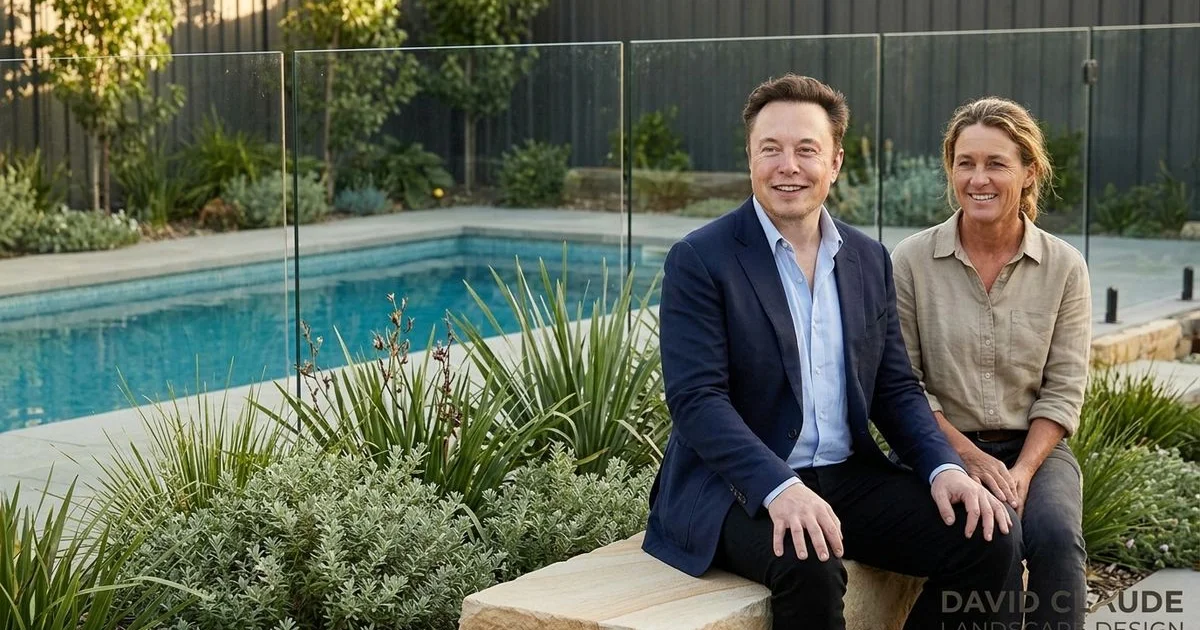
We have all seen beautiful, expensive landscaping turn brown and die within a single summer of being planted near a new pool.
The constant splashing of chlorinated water and regular backwash flooding creates an extremely hostile environment for standard garden varieties. Melbourne’s north-eastern and inner-eastern suburbs feature challenging terrain that makes replacing dead poolside plants particularly difficult and costly.
Our team at David Claude Landscape Design uses a specific selection of coastal native species to solve this exact problem. Native plants from coastal Victoria naturally tolerate high salinity, making them the perfect solution for modern salt-cell pool zones.
Let’s look at the data behind these planting failures and explore the exact species that will thrive in your space.
Why Salt-Tolerance Matters Around Pools
We specify salt-tolerant plants exclusively around pool edges because they can withstand regular drenching from 3,000 ppm salinity water. Ordinary garden plants fail under these conditions because the salt burns their foliage and severely damages their root systems.
Recent 2026 industry data shows that salt chlorinator systems now account for the vast majority of new backyard pools in Australia.
Our preferred native palette evolved on the windy, salty coasts of Victoria. These specific plants process high sodium levels naturally, requiring zero special care or constant replacement. Chlorine residue from splash-out is another major stressor that quickly strips the waxy coating right off non-adapted leaves.
We also factor in the occasional spillage during heavy rains or routine pool backwashing. This intermittent flooding drowns ornamental plants that lack the resilience to handle sudden waterlogging. Choosing the right coastal natives prevents these common failures completely.
”Using salt-tolerant natives cuts replacement costs to zero, as they naturally process the exact sodium levels found in modern pool systems.”
The Core Five Salt-Tolerant Natives
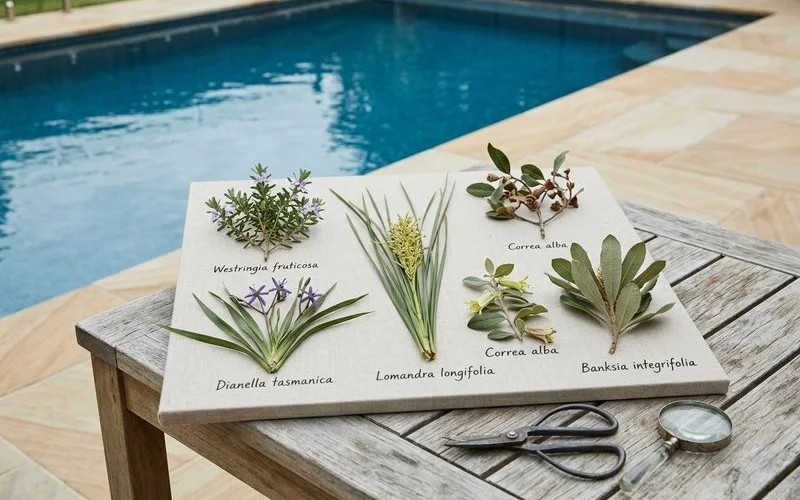
Our landscaping crew relies on five foundational native species to form the structural backbone of every successful poolside project. These specific plants handle intense sun, high salinity, and poor soil with remarkable ease. Each selection offers a distinct architectural benefit while demanding very little ongoing maintenance.
Westringia fruticosa (Coastal Rosemary)
We use this resilient shrub as the primary workhorse for low, mass-planted hedging around the water’s edge. It grows rapidly to a mature size of about 1 to 2 metres tall and wide. The Yates Australia 2026 planting guide recommends spacing them 50 centimetres apart to create a dense, impenetrable barrier.
Our team loves that this native behaves exactly like traditional boxwood but requires a fraction of the water. You get the formal look without needing to provide any protection from salt spray. Regular light clipping easily maintains its tight, rounded shape throughout the year.
Dianella revoluta and caerulea (Flax Lily)
We frequently feature these clumping perennials to soften hard stone paving and concrete retaining walls. They drop virtually no litter into the water, which keeps your skimmer boxes running smoothly. Their distinct blue-grey tones pair perfectly with the modern bluestone paving popular across Melbourne.
Lomandra longifolia (Mat Rush)
Our designers specify the popular ‘Tanika’ cultivar extensively because of its compact, predictable growth habit. This plant plays a similar structural role to the flax lily but adds a stronger vertical element to the garden bed. Reaching just 50 to 60 centimetres in height, it never overgrows or blocks narrow poolside walkways.
We highly recommend it as a long-lived, incredibly tough option that laughs off heavy splashing. The tough, strappy foliage stays a vibrant green even during the hottest, driest months of summer. Minimal maintenance makes it a favorite among busy homeowners.
Correa alba (White Correa)
Our top choice for informal hedging and windbreaks is this small, hardy evergreen shrub. It produces delicate tubular flowers from autumn right through the spring season. Local honeyeaters flock to these blooms during the sparse winter months, bringing beautiful wildlife to your yard.
We position them strategically to block the cold winds that often whip across raised pool decks. The dense, grey-green foliage provides excellent year-round screening from neighboring properties. Tolerating both salt and poor soil, it is virtually indestructible once its root system takes hold.
Banksia integrifolia (Coastal Banksia)
We position this structural plant as a standalone feature rather than a mass-planting element due to its larger mature size. It delivers stunning, pale-yellow flowers all year round. This banksia requires excellent drainage but offers unmatched drought and salt tolerance once established.
Our experts suggest planting it slightly further back from the immediate coping to allow room for its mature canopy. The silver undersides of its leaves create a beautiful visual effect when caught by the breeze. It thrives in the sandy, nutrient-poor conditions often left behind after major pool excavations.
Other Species Worth Considering
We often incorporate a secondary layer of specialized plants to introduce architectural variety into a salt-tolerant layout. Adding these distinct shapes and textures prevents the garden from looking too uniform or monotonous. These selections thrive perfectly on the sloping, well-drained blocks common in Melbourne’s challenging terrain.
We use the following reference table to match the right secondary plant to the correct garden zone.
| Plant Species | Common Name | Mature Height | Best Poolside Application |
|---|---|---|---|
| Banksia ericifolia | Heath Banksia | 2 to 3 metres | Medium screening on sloping residential blocks |
| Grevillea ‘Poorinda Royal Mantle’ | Groundcover Grevillea | 0.2 metres | Prostrate coverage spreading 3+ metres over steep embankments |
| Pittosporum tobira ‘Miss Muffet’ | Japanese Mock Orange | 1 metre | Low-mounding exotic feature near stone paving |
| Olea europaea ‘Tolleys Upright’ | Upright Olive | 4 to 6 metres | Low-fruiting architectural height for Mediterranean styling |
| Strelitzia reginae | Bird of Paradise | 1.5 metres | Tropical-leaning briefs and vibrant floral displays |
This clear data helps ensure you place taller species far enough back to prevent overshadowing the water. Careful placement keeps the main swimming area drenched in full, warm sunlight throughout the afternoon.
Our team frequently mixes these exotic and native options together to create a customized look. Just verify that the watering needs of neighboring plants match up closely. Grouping plants with similar irrigation requirements prevents accidental overwatering or root rot.
What to Avoid
We regularly see significant financial damage caused by planting heavy leaf-droppers, aggressive root systems, or sharp foliage near swimming areas. Avoiding these three specific categories is the absolute easiest way to protect your costly backyard infrastructure. A single poor plant choice easily ruins your summer relaxation and severely drains your bank account.
Heavy Leaf-Droppers
Our maintenance partners strongly advise against planting deciduous oaks, ash trees, or liquidambars anywhere near the water. Dead leaves quickly overwhelm your filtration system, causing pump failures and severe water quality issues. According to 2026 data from Australian maintenance professionals, recovering a green, debris-filled pool costs between $300 and $800 per incident.
Aggressive Root Systems
We frequently discover crushed underground plumbing caused by large species like Ficus macrophylla and weeping willows. These invasive root networks easily lift surrounding pavers and can completely compromise the main fiberglass or concrete shell. Recent 2026 ServiceTasker repair records show that fixing structural underground plumbing leaks caused by roots costs up to $5,000.
Sharp-Leafed and Thorny Species
Our installers never place Agave attenuata, spiky yucca varieties, or palms with heavy seed pods in the primary splash zone. These architectural plants present a serious safety hazard for children running barefoot across the wet decking. A simple slip near a sharp leaf can easily result in a quick, painful trip to the emergency room.
Designing the Pool Planting
We always use a layered zoning approach that places the toughest, lowest-litter plants immediately at the water’s edge. This strategy protects delicate species from direct chemical exposure while framing the area beautifully. It relies on establishing distinct borders based on the exact distance from the splashing water.
Our designers break the landscape down into three distinct planting zones.
- The Primary Splash Zone (0 to 2 metres): Plant your toughest Westringia hedging and Dianella borders right against the coping.
- The Secondary Zone (2 to 5 metres): Introduce slightly less tolerant species that offer more architectural interest, like mid-sized banksias and Correas.
- The Outer Zone (5+ metres): Open up your design to a much wider variety of plants, as the salt exposure drops to almost zero.
High-capacity pre-filters like the Waterco Trimline Leaf Trapper offer a great solution if large trees already exist in that outer zone. Capturing debris early saves your main pump from burning out during heavy autumn leaf drops.
We strongly recommend finalizing your plant choices and zone distances before pouring any concrete. To expand your garden beyond the immediate aquatic area, check out this guide to non-pool native planting. Comprehensive layout strategies are also available in our main pool landscape design hub.
Our experience proves that getting this initial layout right saves thousands of dollars in future replanting efforts. Smart planning simply makes owning and maintaining your outdoor oasis a much more enjoyable experience. Start mapping out your zones today, and enjoy a vibrant, trouble-free garden all year long.