Guides
How to Choose Slip-Resistant Materials for Pool Surrounds
Slip ratings (R11, R12), material options, and which surfaces work safely around residential pools — bluestone, travertine, sandstone and exposed aggregate compared.
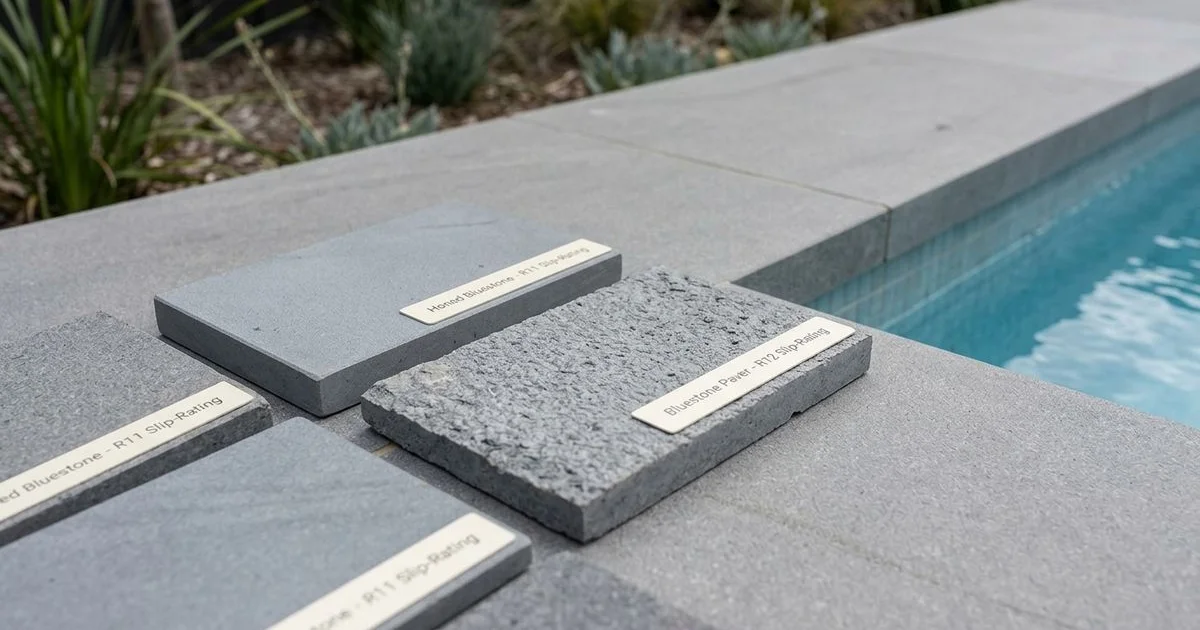
Many homeowners in Melbourne’s challenging terrains underestimate how drastically a wet deck changes material performance.
This single oversight creates a significant safety hazard. Data from Australian health organizations indicates that pool-area slips contribute to a surprising number of serious injuries. About 20% of quadriplegia cases nationwide actually stem from jumping and slipping accidents near the water. Our team at David Claude Landscape Design relies on verified grip data to prevent these dangerous incidents.
We are going to break down the specific testing standards used in Australia today. A side-by-side comparison of the most popular paving choices will then help you build a safe, slip resistant pool surround.
Why Slip Rating Matters
Safety standards define exactly how a wet surface performs underfoot. Pool surrounds get wet constantly, and children will inevitably run on them.
This combination of water and a hard surface is the most common cause of pool-area injury in Australian homes. Proper material choice serves as your primary defense.
Our experts look directly to the AS 4586 testing standard for residential compliance. This Australian building code requires external surfaces to meet specific friction levels. Two distinct rating systems exist in the market today.
- P-Ratings (Wet Pendulum Test): This test mimics a shoe striking a wet surface, grading materials from P0 to P5. P4 is the absolute minimum pool deck slip rating recommendation for wet environments, while P5 offers the highest grip.
- R-Ratings (Oil-Wet Ramp Test): This method places a person on a slippery incline, resulting in scores from R9 to R13. R11 is the practical minimum for residential surrounds, and R12 provides superior safety for persistently wet zones.
- Barefoot Wet Ramp Test: Evaluated as A, B, or C, this test is specifically designed for areas where people walk without shoes.
We strongly advise checking the technical sheet of any selected stone to verify these specific numbers. A product might look beautiful, but failing to meet a P4 or R11 rating can lead to failed council inspections.
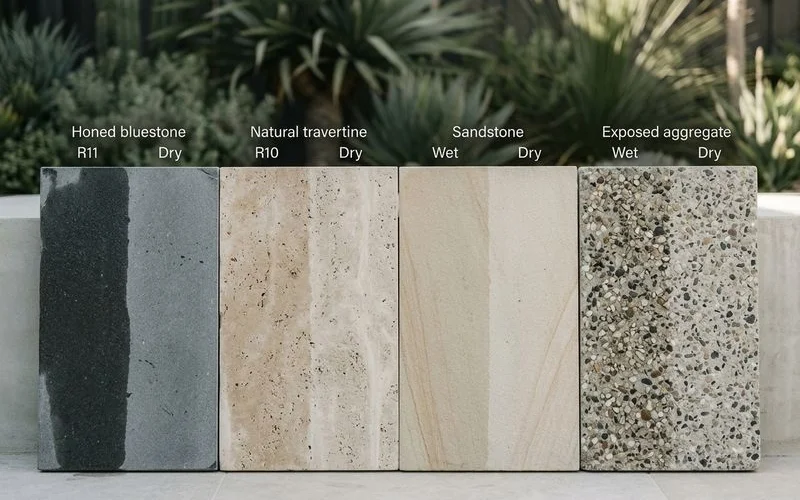
Material Comparison
| Material | Australian Slip Rating | Aesthetic | Practical Trade-offs |
|---|---|---|---|
| Honed bluestone | R11 (P4 equivalent) | Premium, ages well | High heat retention in summer |
| Flame-finish bluestone | R12 (P5 equivalent) | Textured, rugged | Slightly rougher under bare feet |
| Tumbled travertine | R10 to R11 (P3 to P4) | Soft, Mediterranean | Needs frequent sealing, softer stone |
| Brushed travertine | R12 (P4 to P5) | Slightly rougher feel | Same trade-offs as tumbled |
| Honed sandstone | R10 (P3) | Pale, warm | Fails some safety inspections, sealing required |
| Sawn sandstone | R11 (P4) | Slightly rougher | High maintenance to prevent stains |
| Exposed aggregate | R11 to R12 (P4 to P5) | Industrial, durable | Can feel harsh to sit on |
| Honed Concrete | R11 (P4) | Modern, clean | Requires expert installation to prevent cracking |
Comparing these options requires balancing safety ratings against long-term maintenance. Some stones naturally offer better grip, while others require special surface treatments to meet the AS 4586 standards. We recommend using this table as a starting point for discussions with your landscape designer.
Bluestone: Our Most-Used Pool Surround Material
Honed bluestone typically hits that essential R11 or P4 rating straight from the quarry. This natural basalt is the standard premium slip resistant pool surround in Melbourne for several very good reasons. The stone is Australian-quarried, structurally dense, and highly resistant to the mould and mildew that thrive in wet environments.
It pairs beautifully with both contemporary and heritage architecture, aging into a rich, deep grey-blue over time. Our clients frequently ask about the temperature of these dark stones during a hot January afternoon.
Heat retention is the primary downside of this material. Honed bluestone placed in direct summer sun absorbs solar radiation and can reach uncomfortable surface temperatures. You can mitigate this issue through smart environmental design.
- Strategic Shading: Build timber pergolas or plant mature canopy trees over the main seating areas.
- Color Blending: Transition to lighter-colored materials like travertine for sections exposed to full afternoon sun.
- Texture Adjustment: Use Harkaway Bluestone with a sawn finish, which provides excellent grip while dissolving surface water quickly.
For the coping specifically, which is the edge directly abutting the water, some homeowners upgrade to a flame-finish or sandblasted texture. This bumps the safety score to an R12 or P5 rating. The aesthetic feels slightly less polished, but that massive jump in slip resistance is absolutely worthwhile in the main splash zone.
Travertine: The Mediterranean Alternative
Travertine provides a naturally cool surface that rarely overheats under the harsh Australian sun. This limestone variety reads softer and paler than basalt, making it a brilliant match for white or render-finished contemporary architecture.
The lighter color actively reflects solar radiation, ensuring the deck remains gentle on bare feet even during heatwaves. We appreciate the long global heritage of this stone in aquatic settings.
Travertine in a tumbled or brushed finish typically hits an R11 rating, satisfying basic compliance. Choosing this pale stone does introduce several specific maintenance realities.
- Frequent Resealing: Travertine requires a high-quality penetrating treatment every 5 to 7 years.
- Salt Vulnerability: In saltwater environments, you must use a consolidator like Dry-Treat Stain-Proof 40SK to prevent freeze-thaw spalling and salt damage.
- Surface Wear: The stone is naturally softer than basalt, meaning it will show physical wear and tear over decades of heavy use.
- Pinhole Traps: Unfilled pieces feature natural microscopic holes that slowly collect dirt and debris if not cleaned regularly.
The investment in premium sealing products is non-negotiable for this material. Skipping this step leaves the porous structure exposed to chlorinated water, which quickly degrades the beautiful finish.
Sandstone, Exposed Aggregate, Other Options
Sandstone works beautifully when your specific architectural pairing demands it. Period homes and soft-toned contemporary designs often benefit from its warm, earthy colors.
Sawn-finish sandstone achieves an R11 safety score, making it vastly superior to honed versions that often fail to meet the R10 threshold. This porous material strictly requires chemical sealing to prevent permanent water stains.
We often explore a few other modern variations for clients wanting reliable non slip pool paving:
- Exposed Aggregate: This poured mixture easily meets compliance codes, delivering an R11 score in a standard finish and an R12 score with deeper stone exposure.
- Honed Concrete: A 50-square-metre poured deck can cost under $7,500 AUD, making it a high-value, slip-resistant choice.
- Porous Paving: This permeable surface allows splash water to drain straight through into the ground, drastically reducing slippery surface puddles.
For the coping-specific decision between bluestone and travertine, see our dedicated guide. For the broader context on integrating these materials into your slip resistant pool surround, explore our resources on pool landscaping.