Guides
What is Pool Landscaping?
A working definition of pool landscaping — coping, surrounds, fencing, planting and lighting — and how it differs from the pool builder's scope.
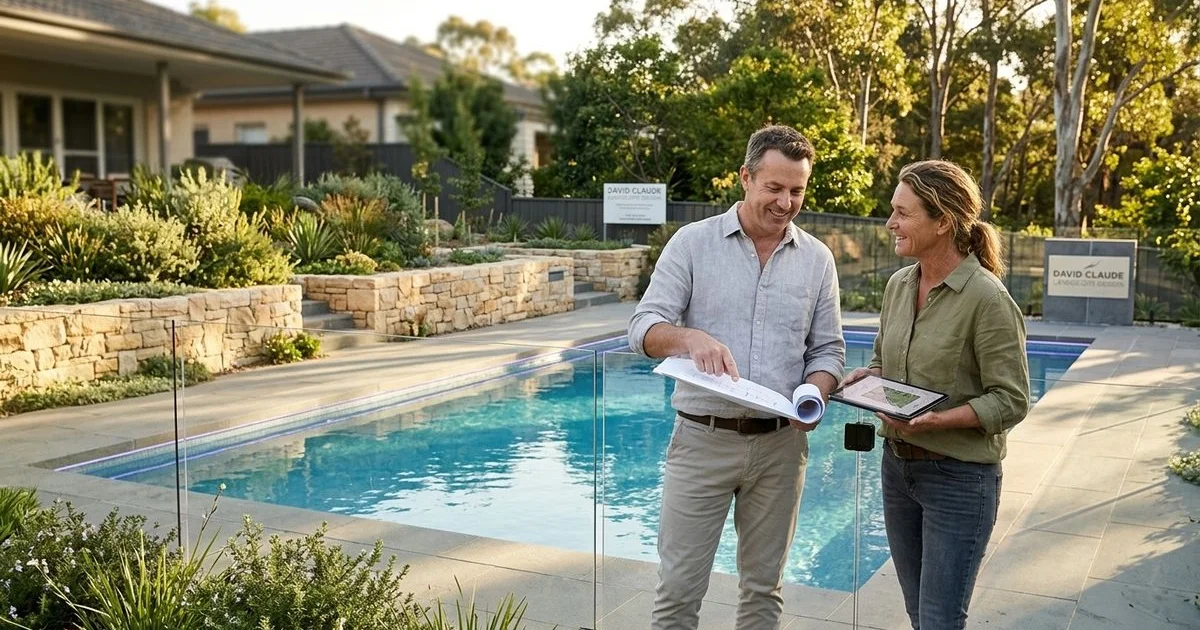
What is Pool Landscaping: A Working Definition
Homeowners frequently ask us what is pool landscaping when planning a new backyard project. The simplest definition covers the design and construction of everything surrounding your pool shell. We treat this process as the creation of a complete outdoor room.
The pool builder handles the excavation, internal structure, plumbing, and interior finish. The landscape side covers the coping, paving, fencing, planting, and lighting.
Our team knows that a typical pool sits right at the center of your property’s layout. When executed properly, the pool surround design feels like a natural extension of your home’s architecture. A poorly planned layout just leaves a body of water stranded in the middle of a lawn.
We aim to blend the hard materials and flora perfectly with your existing environment. The best designs account for salt splash, strict compliance codes, and evening aesthetics. This requires specialized knowledge of local climate conditions.
Our goal as your pool landscape architect is to manage all of these details smoothly.
What Pool Landscaping Includes
Pool landscaping includes five core elements: coping, surround paving, fencing, planting, and lighting. Each component requires specific materials that can survive a harsh, wet environment. We evaluate all of these factors together to create a cohesive layout.
- Coping: This is the edge material positioned directly around the pool shell. See bluestone vs travertine coping for the material decision. Our preferred premium choices include bluestone, travertine, and sandstone.
- Surround paving: The paving extends outward from the coping to form your lounging zones. Australian Standards strictly require a minimum P4 wet pendulum slip rating here. We always push for a P5 rating to ensure maximum safety when the surface is soaking wet.
- Fencing: The safety barrier must comply with local laws and pass a formal inspection. See pool fencing requirements for the specific rules. Our designs use frameless glass or rendered walls to meet these codes without blocking your sightlines.
- Planting: You need salt-tolerant species that can handle splash and harsh pool-zone exposure. Workhorse plants like Westringia, Dianella, and Lomandra will not drop debris into the water. We avoid heavy leaf-shedders to keep your filtration system running smoothly.
- Lighting: A layered lighting plan completely transforms the area at dusk. This setup typically features underwater lights, surround ambient illumination, and targeted plant highlights. Our lighting designs ensure you can safely use the space well into the night.
How Pool Landscaping Differs from General Landscape
Pool landscaping differs from general garden design because it must manage strict compliance codes, harsh chemical exposure, and complex builder coordination. Standard gardens rarely face the same safety regulations or constant water splashing. We rely on our Melbourne experience to manage these three critical constraints.
The differences become very clear when you look at the specific requirements side by side. A standard backyard simply does not carry the same risks or legal obligations. Our comparison below highlights exactly what changes when a swimming pool is introduced.
| Feature | General Landscape | Pool Landscape |
|---|---|---|
| Plant Selection | Broad variety of species based purely on soil and sunlight. | Restricted to salt-tolerant, chlorine-resistant, and low-debris varieties. |
| Paving Standards | Standard slip resistance is usually sufficient. | Must meet minimum P4 (ideally P5) wet pendulum slip ratings. |
| Legal Compliance | Standard boundary fencing rules apply. | Strict AS1926.1 safety barrier laws and mandatory inspections. |
Strict AS1926.1 Compliance
The first major difference is the mandatory safety barrier legislation. Every fence and the 900mm non-climbable zone (NCZ) outside it must meet current standards.
We have to shape fence positions, planting setbacks, and structural elements entirely around these non-negotiable laws.
Salt and Chlorine Exposure
The second constraint involves the harsh chemical environment. Planting palettes are heavily limited by what can actually tolerate constant splash and soil alteration.
Our plant selections focus on hardy, structural greenery that thrives near chlorinated water.
Complex Builder Coordination
The third difference is the precise coordination required with the pool builder. The surround design has to integrate perfectly with the pool shell, the equipment locations, and the plumbing penetrations.
We sequence the construction carefully so retaining walls and paving do not interfere with the essential pipework.
This alignment process involves several critical steps. Failing to manage these details early leads to expensive rework. Our project managers focus on these specific coordination points:
- Engineering for Sloping Blocks: Retaining walls must be strategically placed to manage water runoff and create flat terraced zones.
- Equipment Integration: Pumps and filters must be hidden but accessible.
- Plumbing Protection: We protect the infrastructure by ensuring paving sub-bases never crush the underground pipes.
A designer who has completed thirty pool surrounds reads these challenges very differently from someone who has only done three. Specialist experience is non-negotiable for a safe result.
Our team highly advises working with professionals who understand these water-adjacent rules.
When to Engage the Landscape Designer
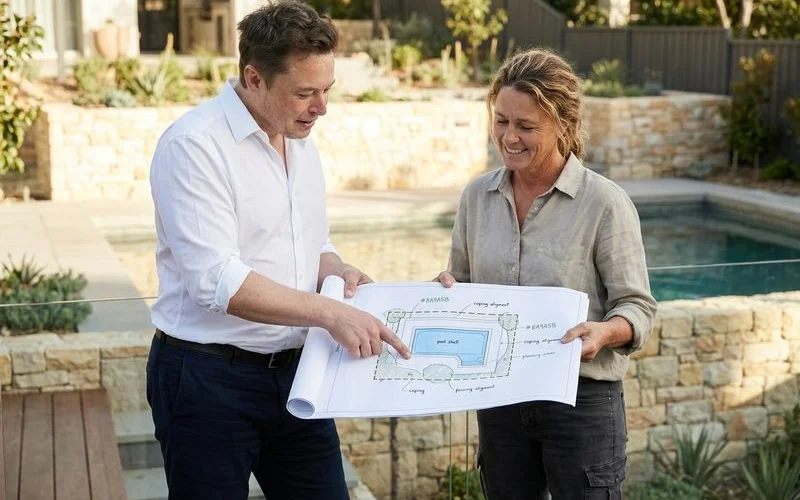
You should engage a landscape designer before the pool shell is dug. Planning the coping detail, surround levels, and fence lines early prevents expensive retrofitting later. We always want to be involved during the initial concept phase.
The pool builder needs to know exactly where the coping sits and what the finished levels are around the shell. They also need to know how the equipment connections will work within the garden layout.
Our early involvement answers these critical design questions before any concrete is poured. For the broader pool landscaping service, see the hub page.
If you are still asking what is pool landscaping going to cost for your specific property, read this guide on pool landscaping cost in Victoria. We suggest reviewing those resources and contacting our team today to start planning your backyard transformation.